

Silica Fabric: The “Golden Armor” Guarding the Heart of Industry
Amidst the churning rivers of molten steel, within the precision workshops sparkling with welding sparks, and in the searing exhaust plumes of ascending rockets, a material stands silent at the extreme edge of ultra-high temperatures, transforming raging heat waves into nothingness. It may appear as a simple swathe of gold or white, yet it harbors extraordinary technological power—this is high-silica fabric, an indispensable “High-Temperature Guardian” in modern industry.
I. Ultimate Performance: Redefining the Benchmark for Heat Resistance
High-silica fabric is no ordinary textile. It is a high-tech inorganic fiber material whose core secret lies in its SiO₂ content exceeding 96%. This characteristic grants it near-limitless thermal endurance:
Long-term service temperature up to 1000°C, effortlessly handling most industrial high-temperature scenarios.
Short-term resistance reaching 1200°C, capable of withstanding sudden, intense thermal shock.
Softening point approaching 1700°C, maintaining structural integrity even in environments where most metals would melt.
These figures are not merely specifications; they are the very foundation of its unwavering stance against welding torches, molten metal, and furnace interiors.
II. Multidimensional Advantages: The All-Rounder Beyond Just “Heat Resistance”
If its exceptional heat resistance is its “spear,” then its comprehensive properties form a sturdy “shield,” allowing it to operate with ease in harsh environments:
Powerful Chemical Stability: Inert to most acids, alkalis, and chemical solvents, with strong corrosion resistance, ensuring longevity in complex settings like chemical plants.
Excellent Thermal Insulation & Electrical Insulation: Low thermal conductivity effectively blocks heat transfer and radiation; simultaneously serves as an excellent electrical insulator, ensuring safety in high-temperature electrical applications.
Outstanding Physical Properties: Flexible yet high-strength, easy to cut, sew, and wrap, allowing fabrication into various complex-shaped gaskets, curtains, and sleeves.
Safe, Eco-friendly, Non-Combustible: Classified as an A1-grade non-combustible material, producing no smoke or toxic emissions, making it an inherently safe fireproof material.
III. Spanning Myriad Industries: The Ubiquitous High-Temperature Sentinel
Thanks to its “indestructible” nature, high-silica fabric has permeated every critical sector of the national economy and high-tech fields:
Frontline Safety Protection: It is the core material for welding blankets, fireproof curtains, and fire blankets, instantly isolating sparks and slag to protect workers. It also serves as the lining for firefighters’ protective clothing, creating a life-saving barrier in blazes.
Core of Industrial Manufacturing: In metallurgy, it acts as furnace front curtains and ladle covers; in foundries, it’s used for molten metal filtration; in the automotive industry, for exhaust pipe heat shields and muffler liners.
Barrier for High-End Technology: In aerospace, it is a key component for engine insulation and rocket ablative protection; in nuclear power, for cable fireproof wrapping, ensuring safety under extreme conditions.
Tool for Energy Saving & Consumption Reduction: As removable insulation jackets and pipe wrapping materials, it is widely used in petroleum, chemical, and power systems, significantly reducing thermal energy loss and improving efficiency.
Conclusion: The Silent Foundation, The Fiery Responsibility
From a corner of the workshop to the vastness of space, the presence of high-silica fabric may be inconspicuous, yet it consistently bears the heaviest burden where temperatures are highest. It is more than just a fabric; it is the fundamental material safeguard for modern industrial safety, efficiency, and technological breakthroughs. Woven from science and craftsmanship, it silently guards every fusion of steel, every burst of power, every safe operation. On the path toward极限 manufacturing and secure development, the value of this “Golden Armor” shines with ever-increasing brilliance.
Core Specifications at a Glance:
Composition: SiO₂ content ≥96%
Temperature Resistance: Long-term 1000°C, Short-term 1200°C, Softening point 1700°C
Form: Fabric, Thickness 0.6-2.0mm, Gold / White
Key Properties: High-temperature resistance, Non-combustible, Corrosion-resistant, Thermal insulating, Electrically insulating, High toughness
Contact Details
Suntex Composite Industrial Co., Ltd.
Contact Person: Mr. Jason Hu
Tel: +86 132 0712 7986

Send your inquiry directly to us
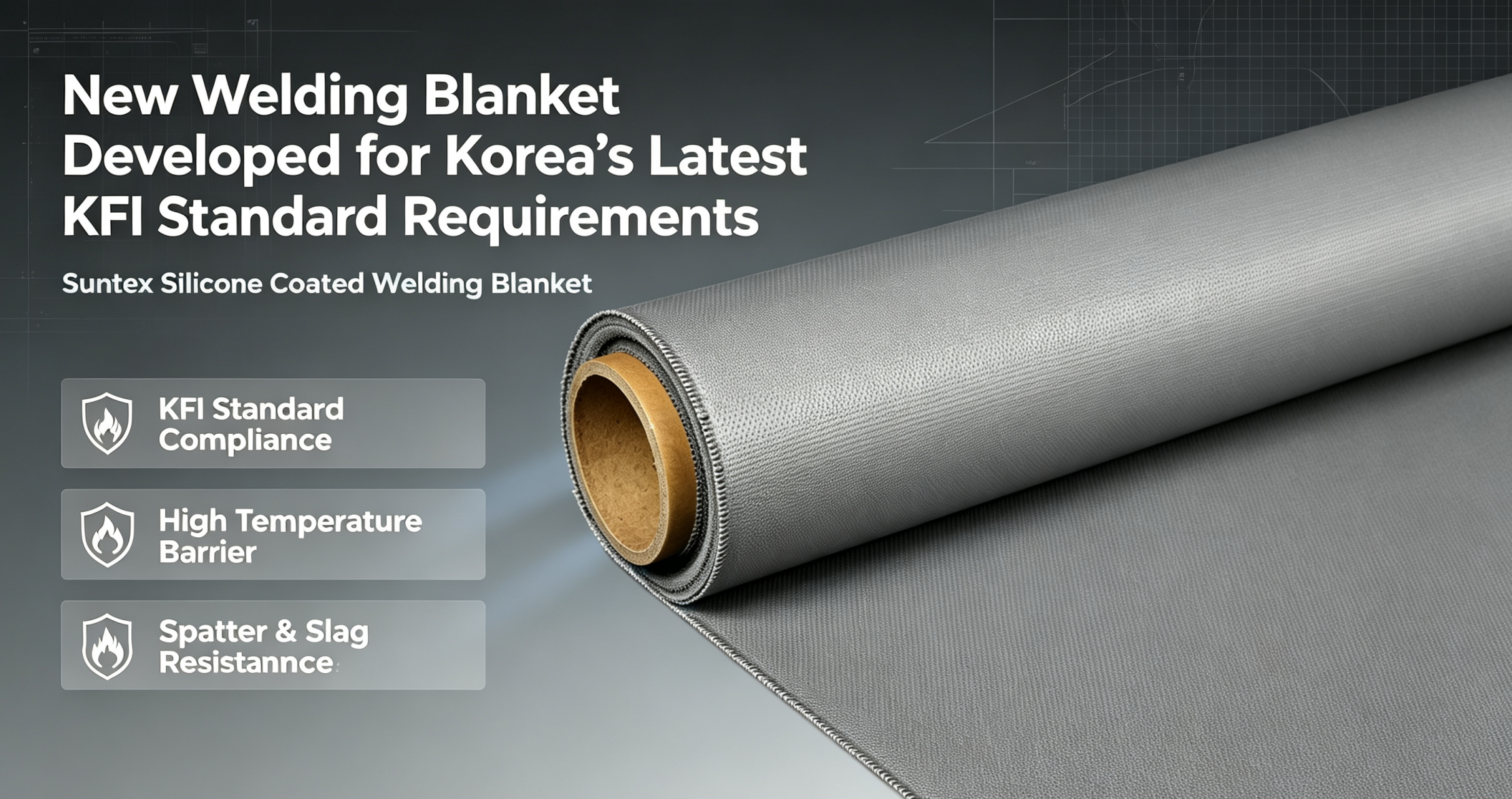
New Welding Blanket Developed for Korea’s Latest KFI Standard Requirements Suntex launches upgraded grey silicone-coated fiberglass welding blankets fully compliant with Korea’s latest KFI fire safety standards for hot work. Made of premium grey silicone coated fiberglass rolls, our blankets deliver reliable protection against welding sparks, molten slag, and high heat for welding, cutting, and […]
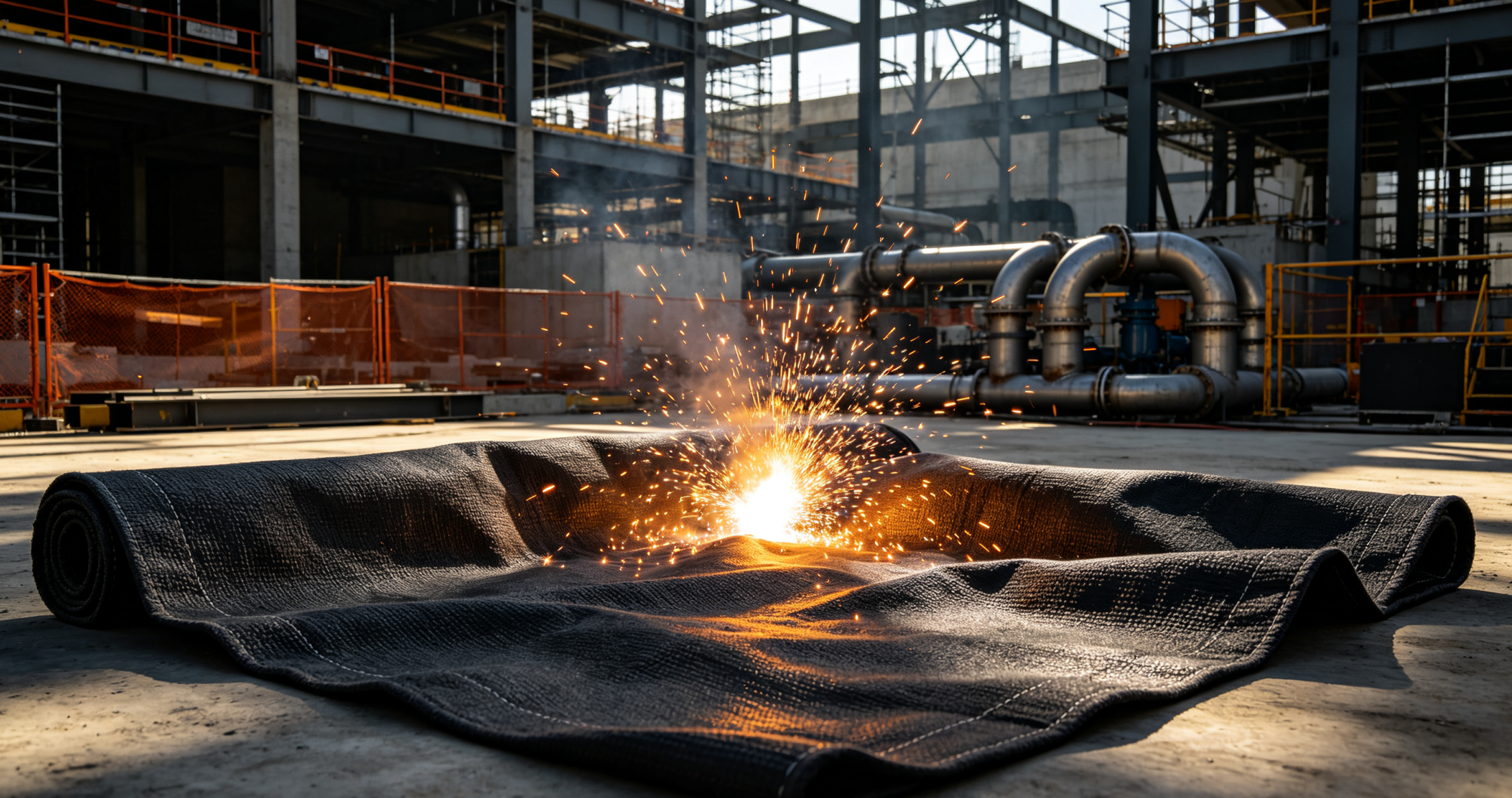
In the high-stakes environment of Japanese automotive manufacturing and precision machining, “good enough” is never enough. When a single stray spark can lead to costly downtime or compromise the integrity of automated assembly lines, the quality of your protective gear is a direct reflection of your operational safety standards. For facilities prioritizing fire prevention and […]
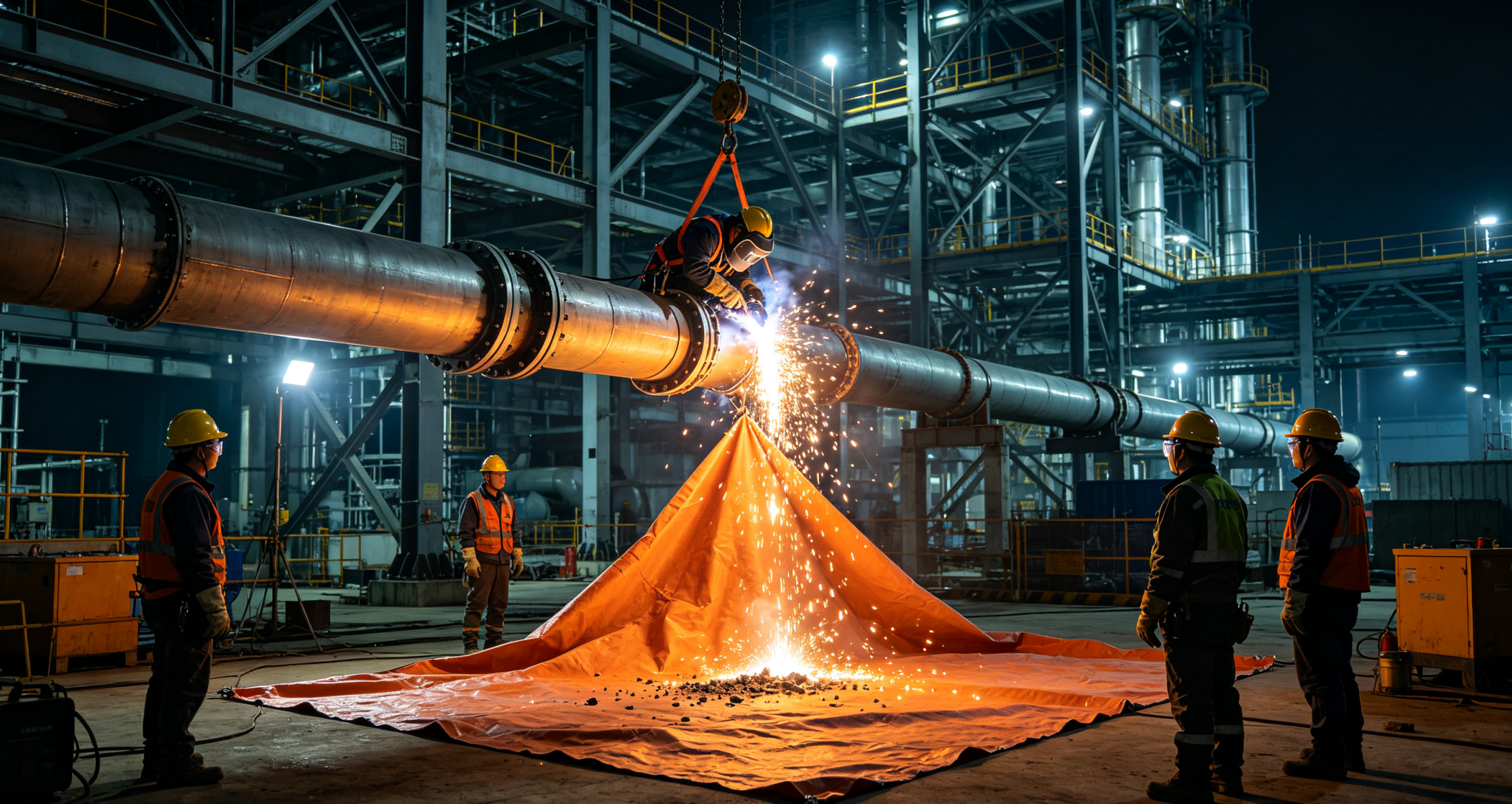
Welding sparks trigger most construction site fires. Even standardized operating procedures carry hidden risks if low-performance flame-retardant fabrics are used. Recent frequent construction fires sound alarms for hot work safety. Most welding-caused blazes stem from inadequate high-temperature slag shielding and substandard fire-resistant materials, rather than improper operation alone. Welding arcs hit over 6,000°C, with flying […]
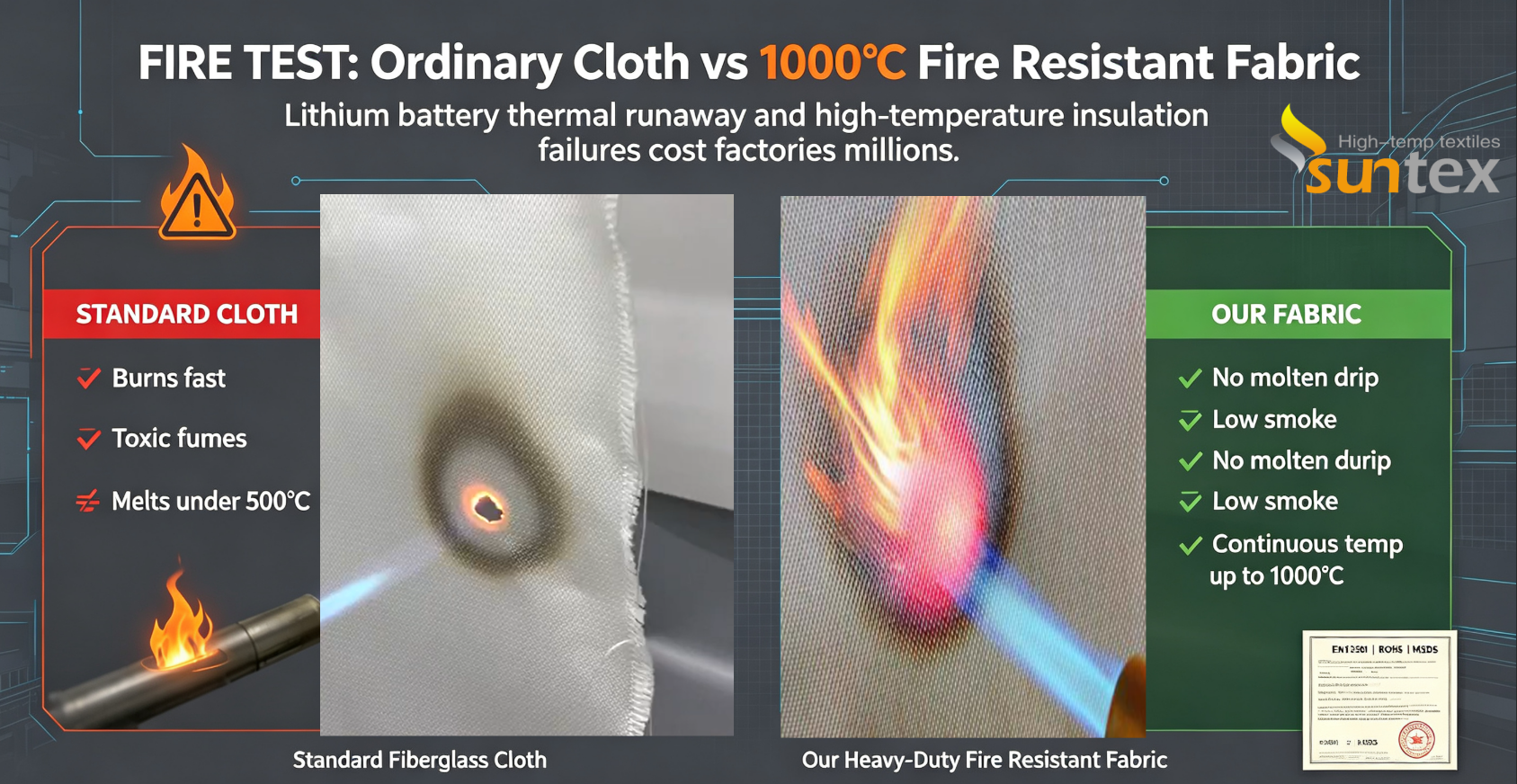
The Hidden Cost of Inferior Thermal Insulation Lithium battery thermal runaway and industrial high-temperature insulation failures frequently trigger factory fires, unplanned shutdowns and massive economic losses. Most of these accidents stem from low-performance standard insulation materials, rather than major equipment faults. Substandard fiberglass cloth fails under high heat, accelerating fire spread and causing costly industrial […]


 English
 Arabic
 Dutch
Dutch French
 German
 Italian
 Polish
 Portuguese
 Russian
 Spanish