

Don’t Wait for a Fire: How to Use a Car Fire Blanket Correctly
When a vehicle catches fire, especially a new energy vehicle (NEV), every second counts. The golden window for self-rescue is extremely short. Yet many people still make critical mistakes during an emergency — simply owning a Car Fire Blanket is not enough. Knowing how to use it correctly could save your life.
Here is a clear, step-by-step guide you can remember in 30 seconds.
Step 1 – Remove and Check
Untie the blanket, step back 3–5 meters, and unfold it.
✅ Identify the upwind direction and approach from the side or rear.
✅ Check the blanket – if it is wet, torn, or damaged, discard it and evacuate immediately.
Step 2 – Fully Unfold
Spread the blanket completely.
✅ Straighten the pull loops and make sure there are no tangles or knots.
Step 3 – Two-Person Grip
Two people should each grab the loops on the sides.
✅ Hold the blanket high – do not drag it on the ground.
Step 4 – Cover the Vehicle
Together, cover the burning vehicle smoothly and completely.
✅ Do not drag repeatedly – this can create gaps that allow fire to escape or reignite.
Step 5 – Seal to Cut Off Oxygen
Use a long‑handled tool (or if none, use your feet while keeping distance) to tuck the edges of the blanket under the vehicle.
✅ Press down on the edges to block as much air as possible.
⚠️ Key Safety Reminders
If the fire is intense, flaring up, or showing signs of explosion – evacuate immediately. Your life comes first.
Do not lift the blanket after covering. Wait for firefighters – lifting can cause reignition.
Everyone should retreat to at least 15 meters away and clear nearby vehicles.
Do not assume the vehicle is safe just because it is covered.
🔋 Special Note for New Energy Vehicle (NEV) Battery Fires
A Car Fire Blanket cannot fully extinguish a battery fire. It can only slow the spread and buy critical time for evacuation.
🚨 If you see smoke or flames shooting from the undercarriage (the bottom of the vehicle):
Do not attempt to cover the vehicle
Evacuate surrounding vehicles immediately
Call emergency services (911) and clear the area
Final Thought
A Car Fire Blanket is an essential safety tool – but only if you know how to use it correctly. Take 30 seconds now to remember these steps. In a real emergency, that brief moment of preparation could be the difference between danger and safety.
Stay calm. Stay safe. And don’t wait for a fire to read the manual.
Contact Details
Suntex Composite Industrial Co., Ltd.
Contact Person: Mr. Jason Hu
Tel: +86 132 0712 7986

Send your inquiry directly to us
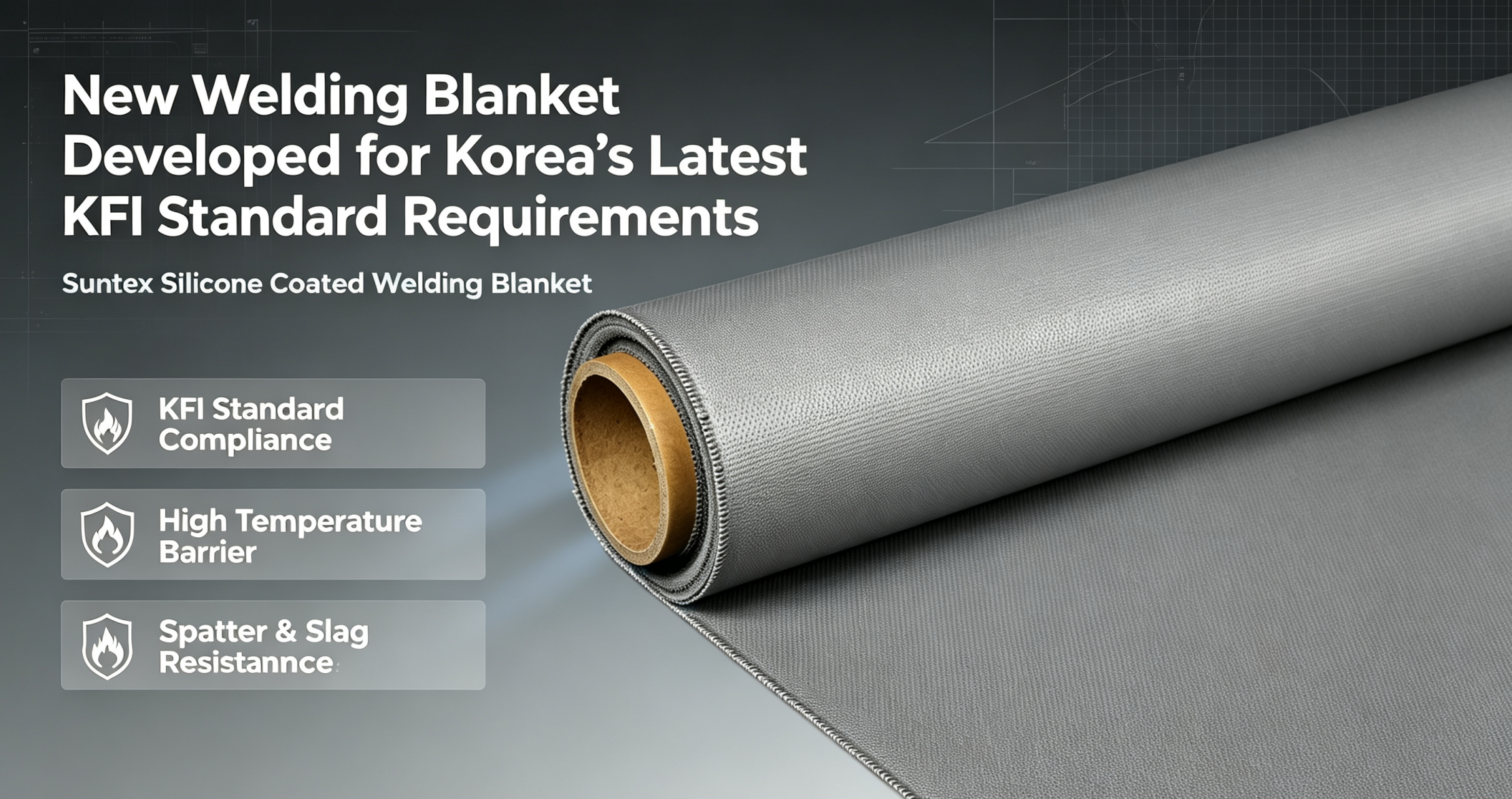
New Welding Blanket Developed for Korea’s Latest KFI Standard Requirements Suntex launches upgraded grey silicone-coated fiberglass welding blankets fully compliant with Korea’s latest KFI fire safety standards for hot work. Made of premium grey silicone coated fiberglass rolls, our blankets deliver reliable protection against welding sparks, molten slag, and high heat for welding, cutting, and […]
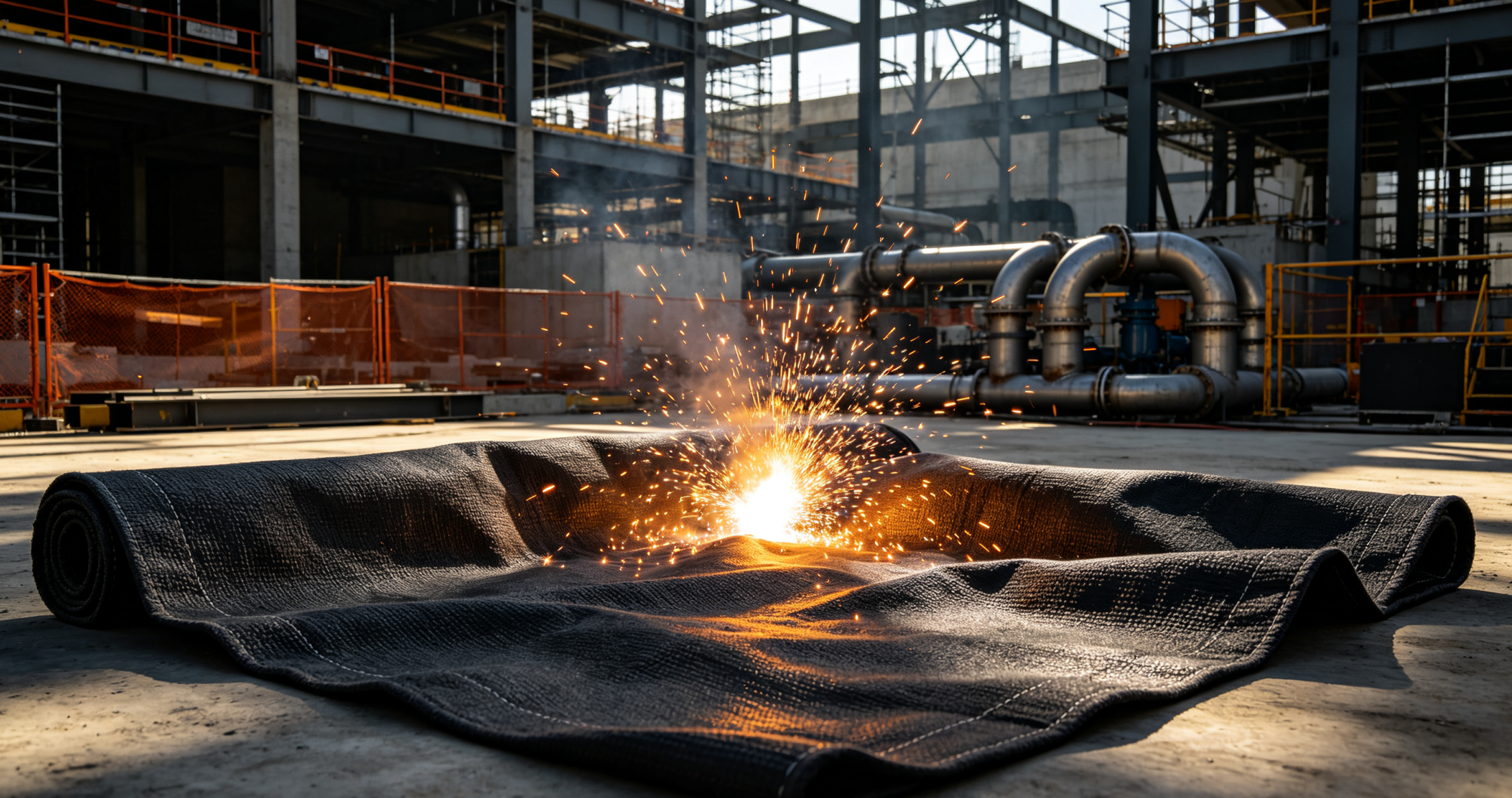
In the high-stakes environment of Japanese automotive manufacturing and precision machining, “good enough” is never enough. When a single stray spark can lead to costly downtime or compromise the integrity of automated assembly lines, the quality of your protective gear is a direct reflection of your operational safety standards. For facilities prioritizing fire prevention and […]
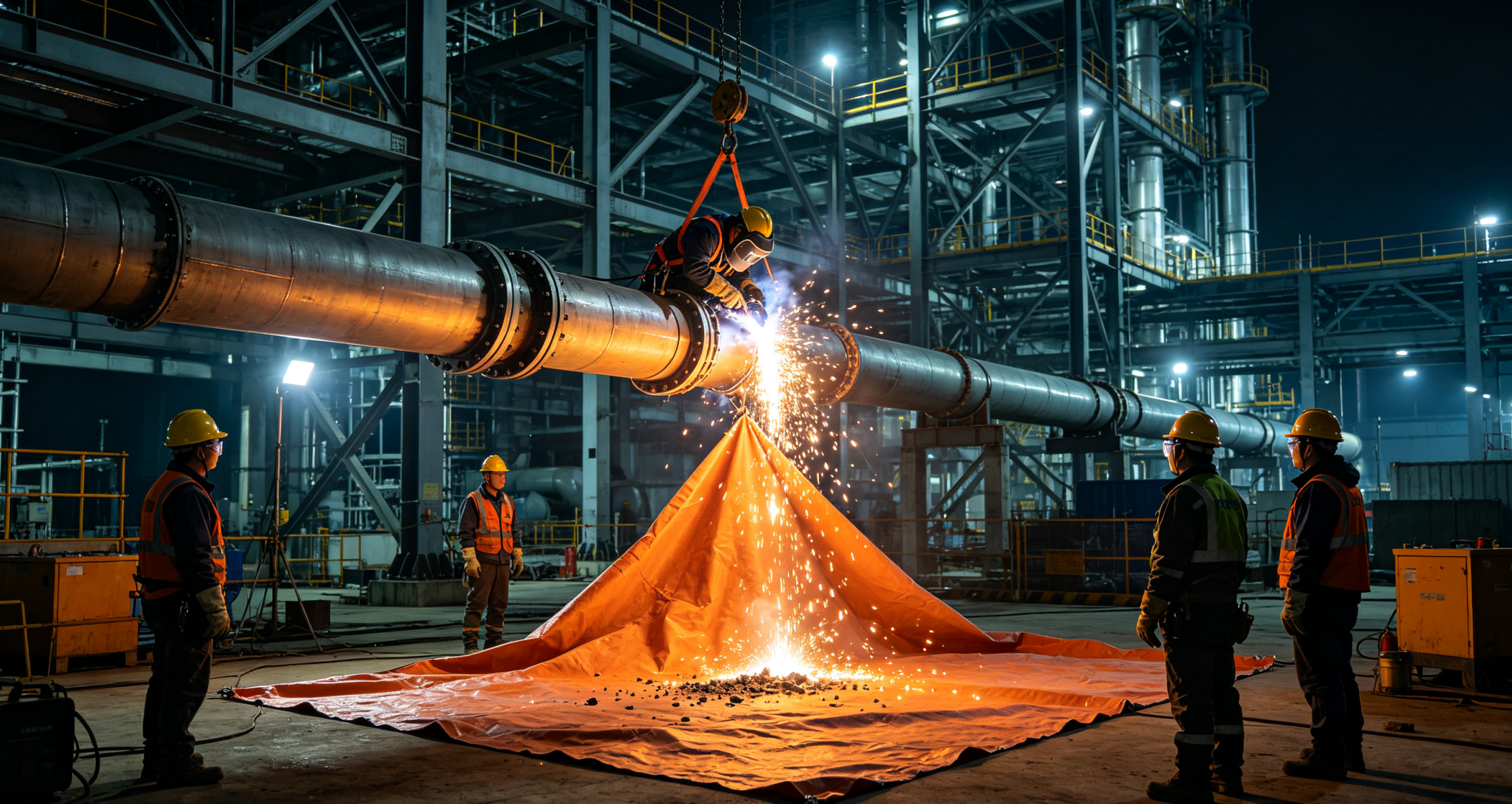
Welding sparks trigger most construction site fires. Even standardized operating procedures carry hidden risks if low-performance flame-retardant fabrics are used. Recent frequent construction fires sound alarms for hot work safety. Most welding-caused blazes stem from inadequate high-temperature slag shielding and substandard fire-resistant materials, rather than improper operation alone. Welding arcs hit over 6,000°C, with flying […]
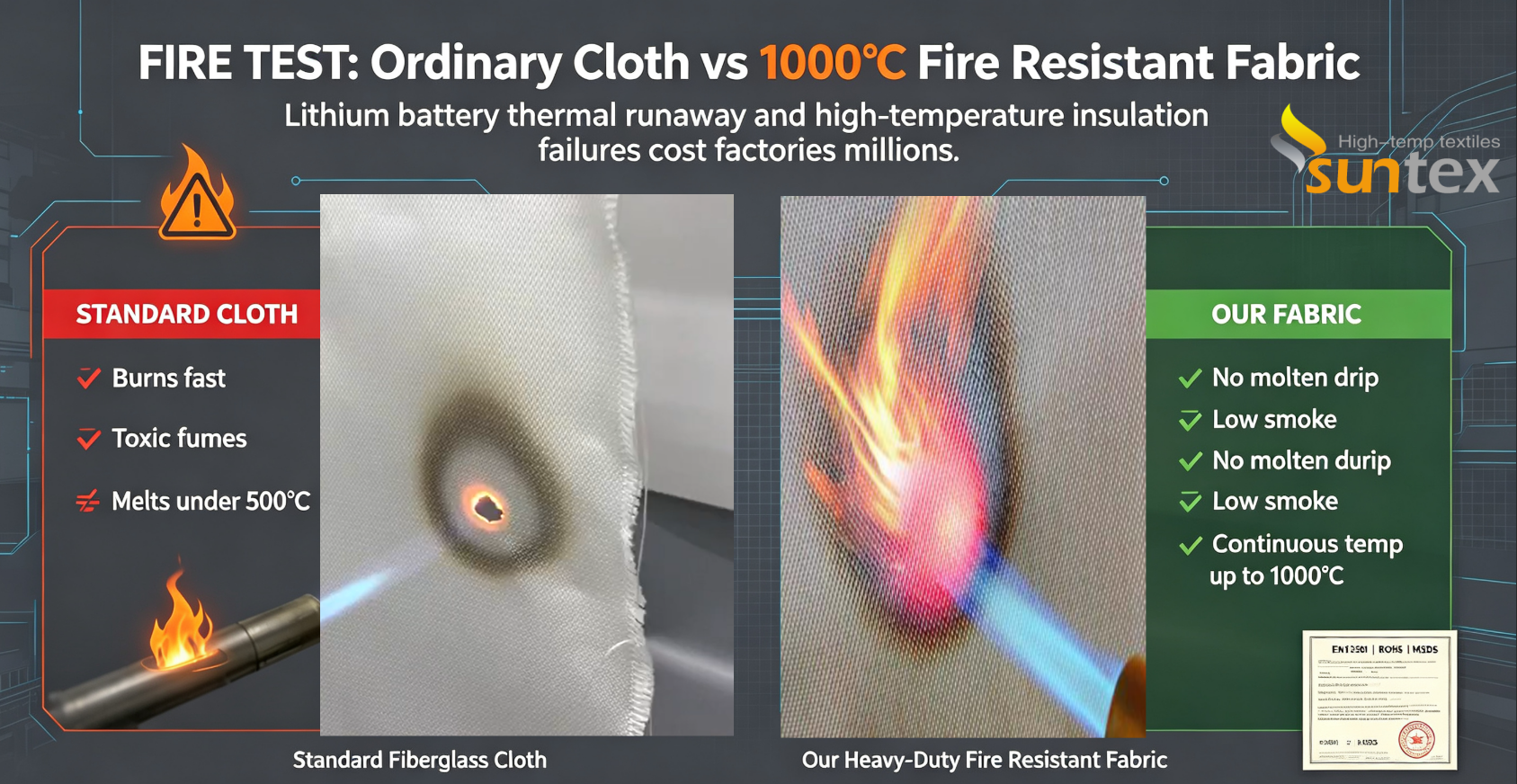
The Hidden Cost of Inferior Thermal Insulation Lithium battery thermal runaway and industrial high-temperature insulation failures frequently trigger factory fires, unplanned shutdowns and massive economic losses. Most of these accidents stem from low-performance standard insulation materials, rather than major equipment faults. Substandard fiberglass cloth fails under high heat, accelerating fire spread and causing costly industrial […]


 English
 Arabic
 Dutch
Dutch French
 German
 Italian
 Polish
 Portuguese
 Russian
 Spanish