

Guardian of Welding Safety: A Guide to the Correct Selection and Use of Welding Fire Blankets

On construction sites where sparks fly, a seemingly ordinary yet crucial safety material silently safeguards personnel and equipment—the welding fire blanket. Specifically designed for welding scenarios, this flame-retardant material has become an indispensable part of modern industrial safety operations.
Welding Fire Blankets: The Safety Barrier on the Welding Site

Welding fire blankets, also known as welding-resistant blankets or flame-retardant blankets, are safety materials specifically used for occasions prone to sparks, such as welding. They effectively block flying sparks, slag, and weld spatter, serving to isolate work areas and separate work layers, fundamentally eliminating fire risks that may arise during welding operations.
This material not only protects onsite personnel and equipment but can also be used as a light barrier, helping to create a safe, clean, and standardized workspace. Depending on the size of the welding sparks and slag, users can choose from different specifications of welding fire blankets. Common types include acrylic-coated fiberglass cloth, silicone-coated fiberglass cloth, polyurethane-coated fiberglass cloth, among others.
Purchasing Guide: Two Key Indicators Cannot Be Ignored

High-Temperature Resistance is the Primary Consideration
A qualified welding fire blanket must possess excellent high-temperature resistance. The professional test method involves using a blowtorch at a distance of 20-30 mm perpendicular to the blanket at full force for 30 minutes. Products that do not burn through or ignite are considered qualified.
Warp and Weft Density Determine the Safety Level
The warp and weft density of the fire blanket directly affects its protective performance. Products with overly sparse density have poor sealing performance, which may lead to slag penetrating the blanket and causing burn injuries. It is essential to carefully check the fabric density during selection to ensure complete safety.
SUNTEX Welding Fire Blankets: Six Major Features Set the Industry Standard

High-quality welding fire blankets possess the following six major characteristics:
-
Excellent high-temperature resistance, usable in extreme environments from -50°C to 1000°C; does not produce molten droplets, burn, or burn through when exposed to open flames.
-
Outstanding heat resistance, cold resistance, and strong resistance to ozone, light, and weather aging.
-
High insulation performance, effectively ensuring electrical safety.
-
Good chemical corrosion resistance, oil resistance, stain resistance, sealed and waterproof, washable for easy cleaning.
-
High strength, good mechanical properties, both soft and tough, easy to cut and process.
Extended Applications: The Broad Horizon of Fireproof and Thermal Insulation Materials
Beyond welding fire blankets, similar fireproof and thermal insulation materials are also shining in various industrial fields. Fireproof thermal insulation blankets feature fireproof, waterproof, anti-corrosion, high-temperature resistance, and easy disassembly characteristics, widely used in industries such as oil platforms, ships, and chemical plants. High-temperature models can be equipped with an additional stainless steel wire mesh, with maximum temperature resistance reaching above 1200 degrees Celsius.
Removable pipe insulation jackets (insulation blankets, insulation covers) are currently high-end insulation materials for pipes and equipment. They are widely used in thermal equipment and various pipelines in fields such as petroleum and chemical industries, power generation, and metallurgy. They are suitable for insulating various complex-shaped equipment and components.
Safety is no small matter. Choosing a qualified welding fire blanket is an act of responsibility towards the lives of operators. As industrial safety standards continuously improve, the technology and quality of welding fire blankets are also constantly upgrading. Only by fully understanding product characteristics and strictly ensuring quality control can we truly guarantee the safe and efficient execution of welding operations.
Whether for large-scale industrial sites or small repair jobs, investing in a high-quality welding fire blanket is like taking out a solid “insurance policy” for safety.
Contact Details
Suntex Composite Industrial Co., Ltd.
Contact Person: Mr. Jason Hu
Tel: +86 132 0712 7986

Send your inquiry directly to us
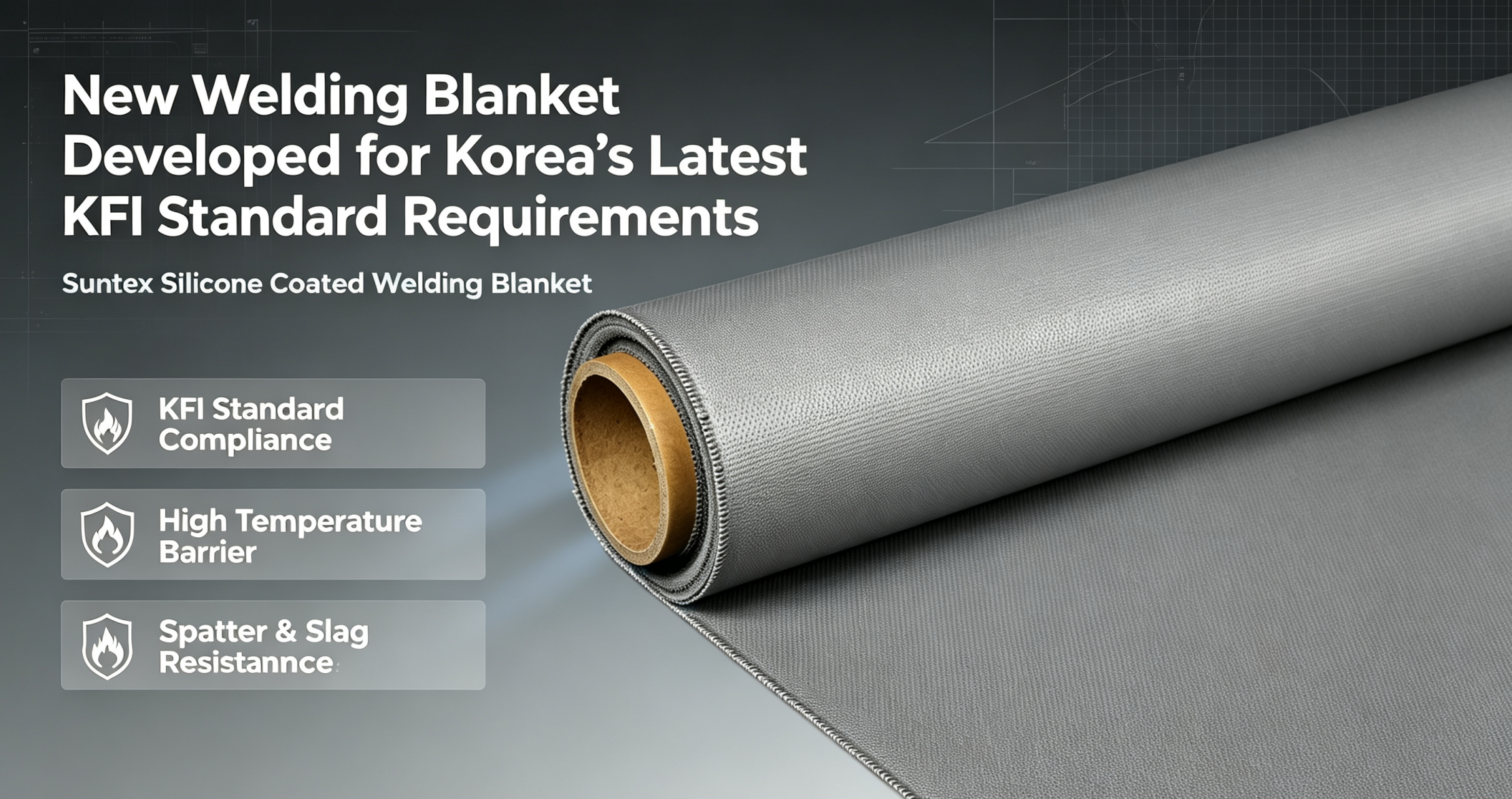
New Welding Blanket Developed for Korea’s Latest KFI Standard Requirements Suntex launches upgraded grey silicone-coated fiberglass welding blankets fully compliant with Korea’s latest KFI fire safety standards for hot work. Made of premium grey silicone coated fiberglass rolls, our blankets deliver reliable protection against welding sparks, molten slag, and high heat for welding, cutting, and […]
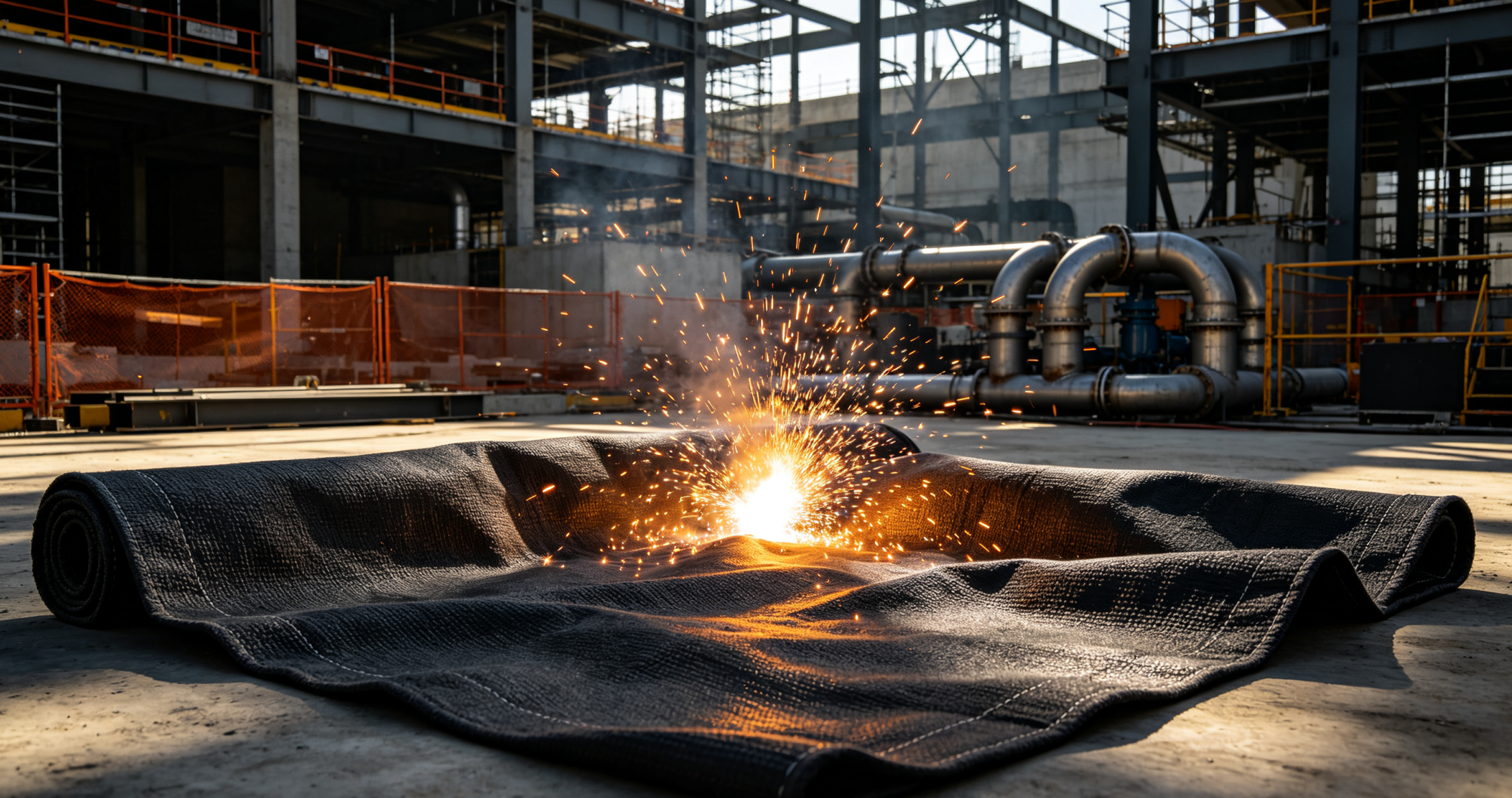
In the high-stakes environment of Japanese automotive manufacturing and precision machining, “good enough” is never enough. When a single stray spark can lead to costly downtime or compromise the integrity of automated assembly lines, the quality of your protective gear is a direct reflection of your operational safety standards. For facilities prioritizing fire prevention and […]
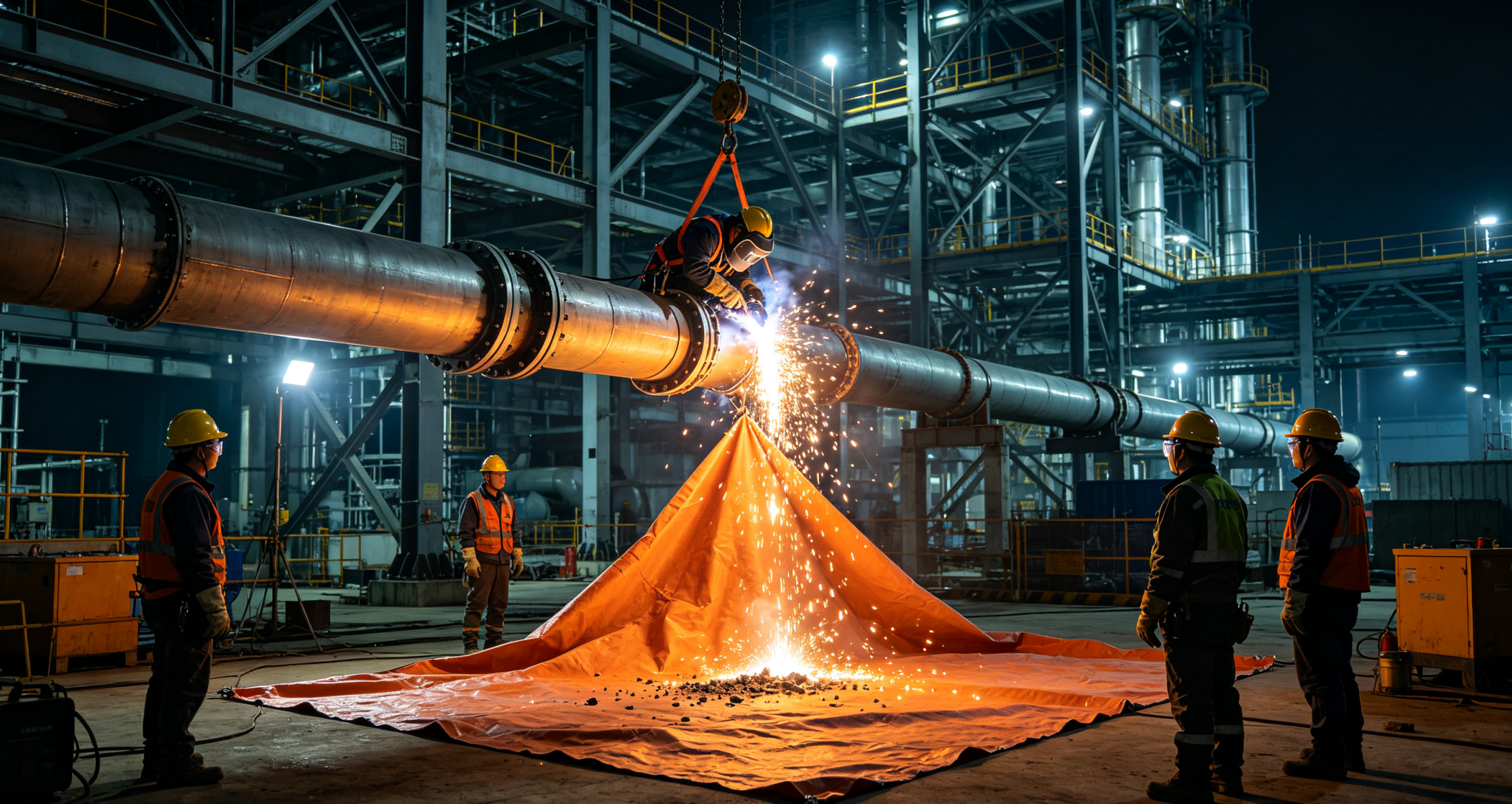
Welding sparks trigger most construction site fires. Even standardized operating procedures carry hidden risks if low-performance flame-retardant fabrics are used. Recent frequent construction fires sound alarms for hot work safety. Most welding-caused blazes stem from inadequate high-temperature slag shielding and substandard fire-resistant materials, rather than improper operation alone. Welding arcs hit over 6,000°C, with flying […]
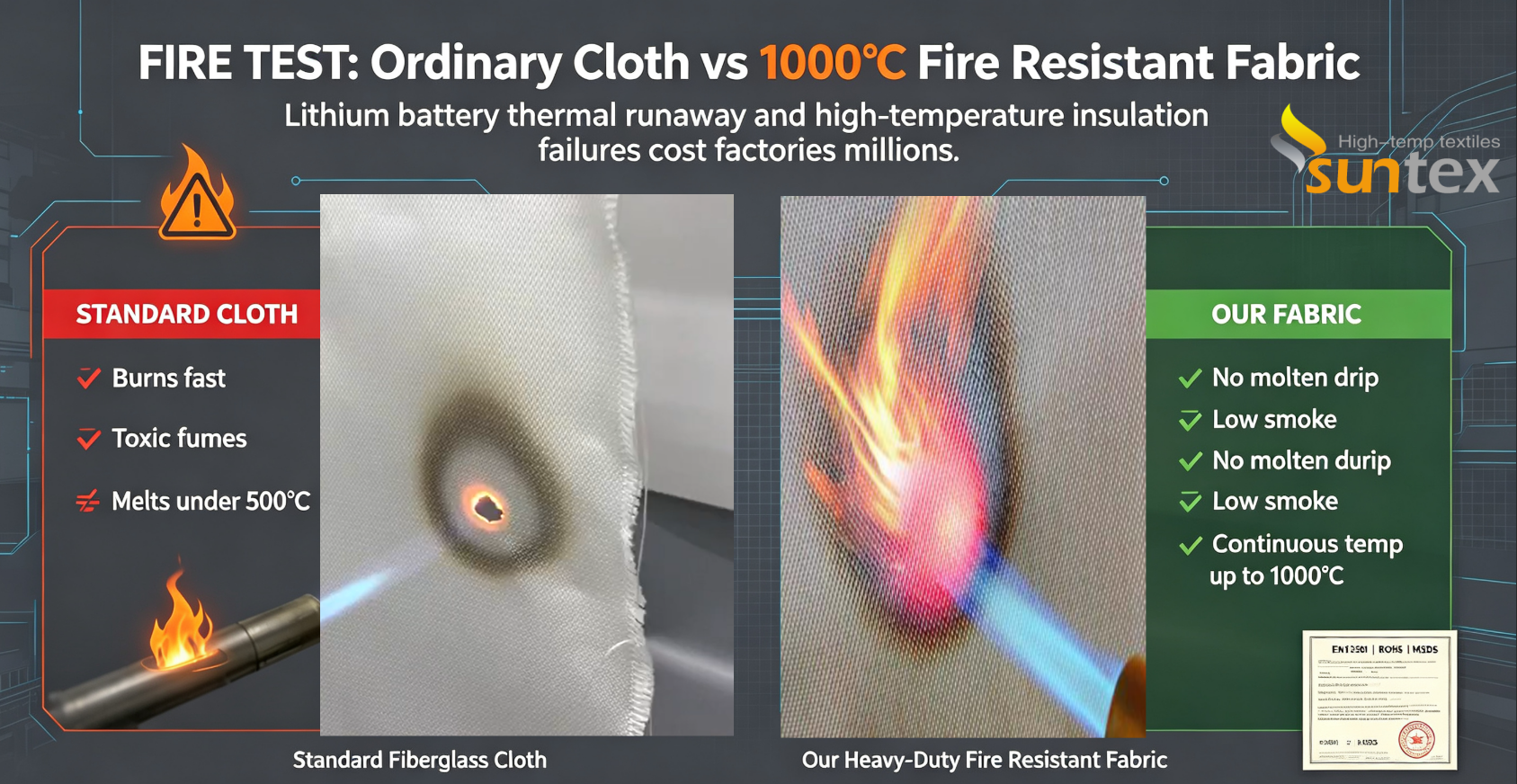
The Hidden Cost of Inferior Thermal Insulation Lithium battery thermal runaway and industrial high-temperature insulation failures frequently trigger factory fires, unplanned shutdowns and massive economic losses. Most of these accidents stem from low-performance standard insulation materials, rather than major equipment faults. Substandard fiberglass cloth fails under high heat, accelerating fire spread and causing costly industrial […]


 English
 Arabic
 Dutch
Dutch French
 German
 Italian
 Polish
 Portuguese
 Russian
 Spanish