

For decades, industrial insulation has been a messy, rigid, and wasteful affair. Think of fixed clay, wool, or fiberglass covers that are permanently installed. When equipment needs maintenance, inspection, or cleaning—a constant reality for valves, turbines, and complex machinery—these traditional materials are torn apart, becoming a hazardous, dusty mess. The result? Significant downtime, high re-installation costs, and a “use-once-and-dispose” model that hurts both the bottom line and the environment.

But what if insulation could be as smart and adaptable as the machines it protects?
A quiet revolution is underway in industrial maintenance, and it’s wrapped in a surprisingly simple concept: the removable and reusable insulation jacket. This isn’t just an incremental improvement; it’s a complete paradigm shift in how we manage thermal efficiency.
Beyond Wrapping Pipes: The Engineered Blanket

Forget the image of a simple blanket. These are highly engineered systems, custom-crafted from advanced flexible materials. Companies like Suntex, leveraging European technology, are producing multi-layered jackets that act as a precision tool. Each layer is selected for a specific purpose: a high-temperature core for insulation, a vapor barrier for moisture resistance, and a chemical-resistant outer layer, all stitched or fastened to form a perfect, form-fitting skin for any equipment.
The magic lies in the customization. Using 3D scans or detailed drawings, these jackets are tailor-made for the most complex geometries—a labyrinth of valves on a chemical reactor, the irregular curves of a steam turbine, or the long barrel of an injection molding machine. They fit like a glove, eliminating thermal bridges and ensuring optimal performance.
Why This is Sparking a Heated Discussion in Industry:
The “Zero-Waste Maintenance” Argument: In an era focused on sustainability, the reusability factor is a game-changer. A single, well-made jacket can last 8-10 years, surviving hundreds of maintenance cycles. This drastically reduces insulation waste and the associated disposal costs. Is this the first step towards a truly circular model in industrial plant operations?
The Economics of “Instant” Access: Downtime is expensive. The ability to unzip, unlace, or unsnap an insulation jacket in minutes—instead of hours or days—for a quick inspection or repair and then put it right back on is a plant manager’s dream. It translates directly into increased productivity and massive cost savings. Could the ROI on these systems make traditional insulation obsolete for frequently serviced equipment?
The “Smart Insulation” Precedent: While currently a passive solution, the design principles open the door for smarter integrations. Imagine jackets with embedded sensors for real-time temperature monitoring or self-sealing mechanisms. The flexible, tailored nature of these products makes them the ideal platform for the next wave of IIoT (Industrial Internet of Things) in plant efficiency.
Real-World Impact: More Than Just Saving Energy
The applications prove its versatility:
Steam Turbines: Instead of a costly, week-long re-insulation project after a turbine overhaul, the original custom jacket is simply re-installed in hours.
Valves & Flanges: The most leak-prone and frequently maintained components are no longer insulation “blind spots.” They can now be efficiently covered, improving both safety and energy conservation.
Injection Molding Machines: Case studies show jackets maintaining barrel temperature so effectively that heating elements cycle less frequently, leading to documented average energy savings of 15% and a dramatically cooler shop floor.
The conversation is no longer just about “how well does it insulate?”—it’s about how intelligently the insulation behaves over the entire lifecycle of the asset.
The question for industry professionals is no longer if removable insulation is effective, but how quickly can we adapt our maintenance and sustainability strategies to leverage this transformative technology? Is your operation still tearing down insulation, or are you ready to simply unzip it?
Contact Details
Suntex Composite Industrial Co., Ltd.
Contact Person: Mr. Jason Hu
Tel: +86 132 0712 7986

Send your inquiry directly to us
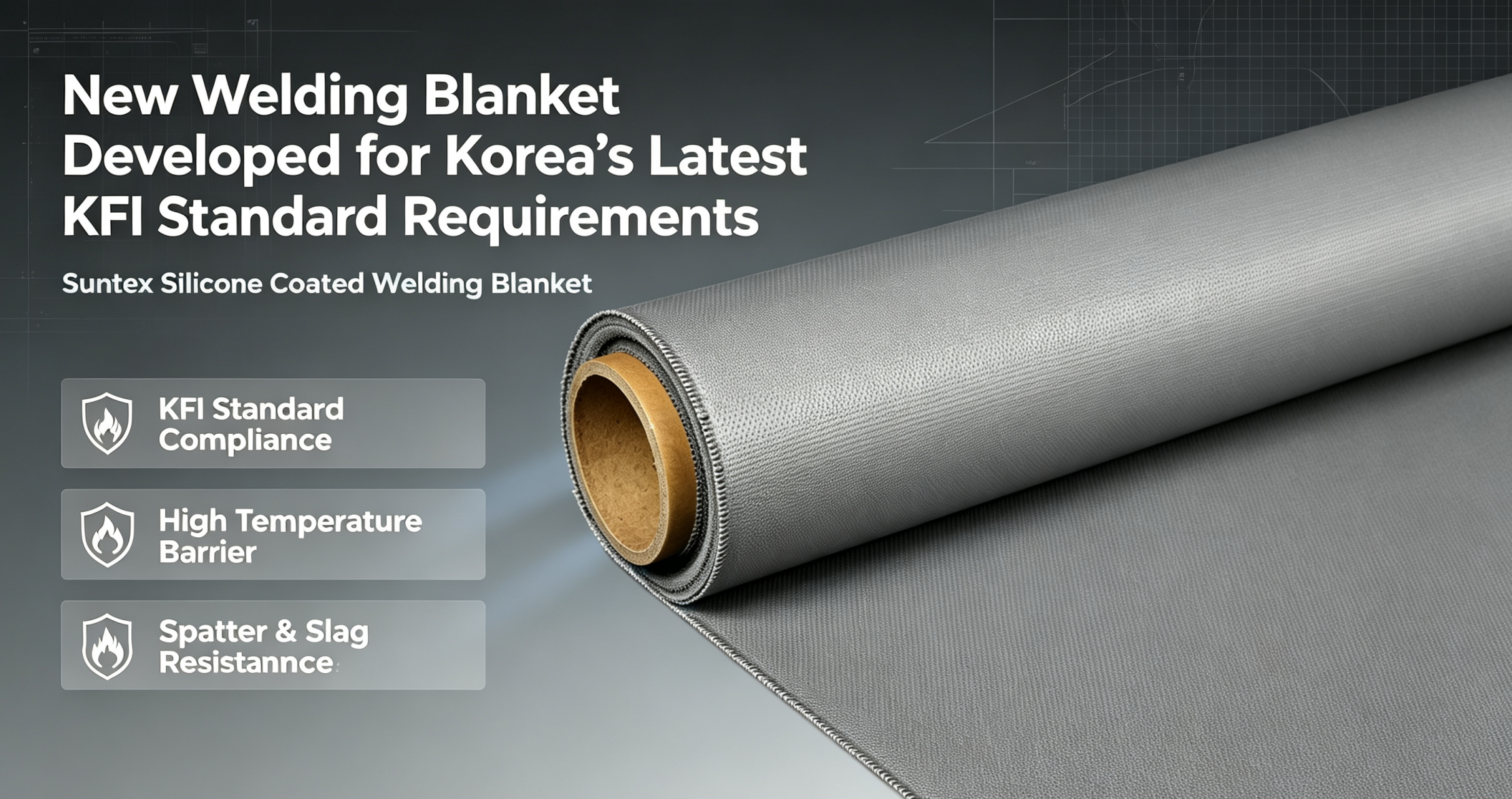
New Welding Blanket Developed for Korea’s Latest KFI Standard Requirements Suntex launches upgraded grey silicone-coated fiberglass welding blankets fully compliant with Korea’s latest KFI fire safety standards for hot work. Made of premium grey silicone coated fiberglass rolls, our blankets deliver reliable protection against welding sparks, molten slag, and high heat for welding, cutting, and […]
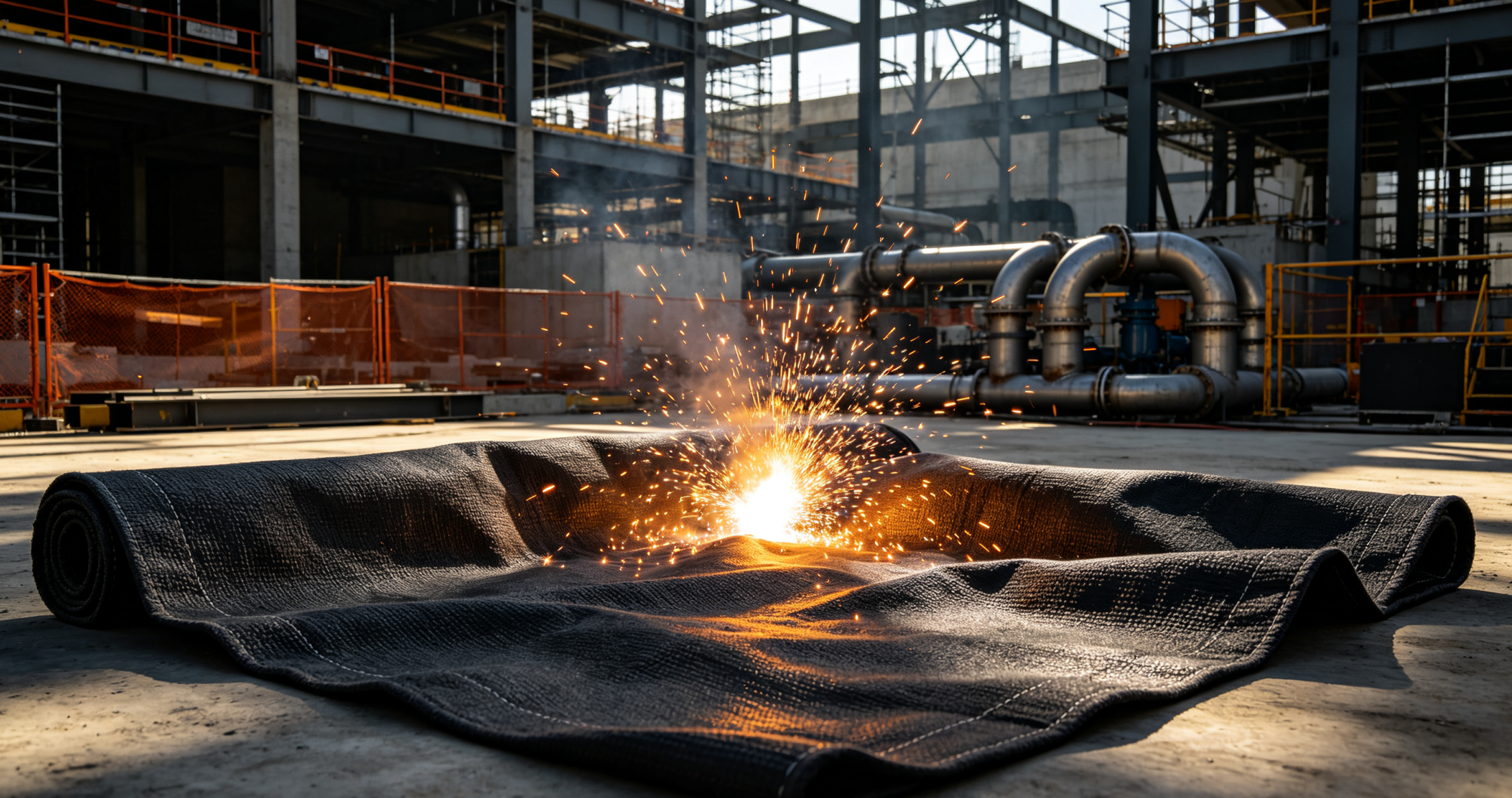
In the high-stakes environment of Japanese automotive manufacturing and precision machining, “good enough” is never enough. When a single stray spark can lead to costly downtime or compromise the integrity of automated assembly lines, the quality of your protective gear is a direct reflection of your operational safety standards. For facilities prioritizing fire prevention and […]
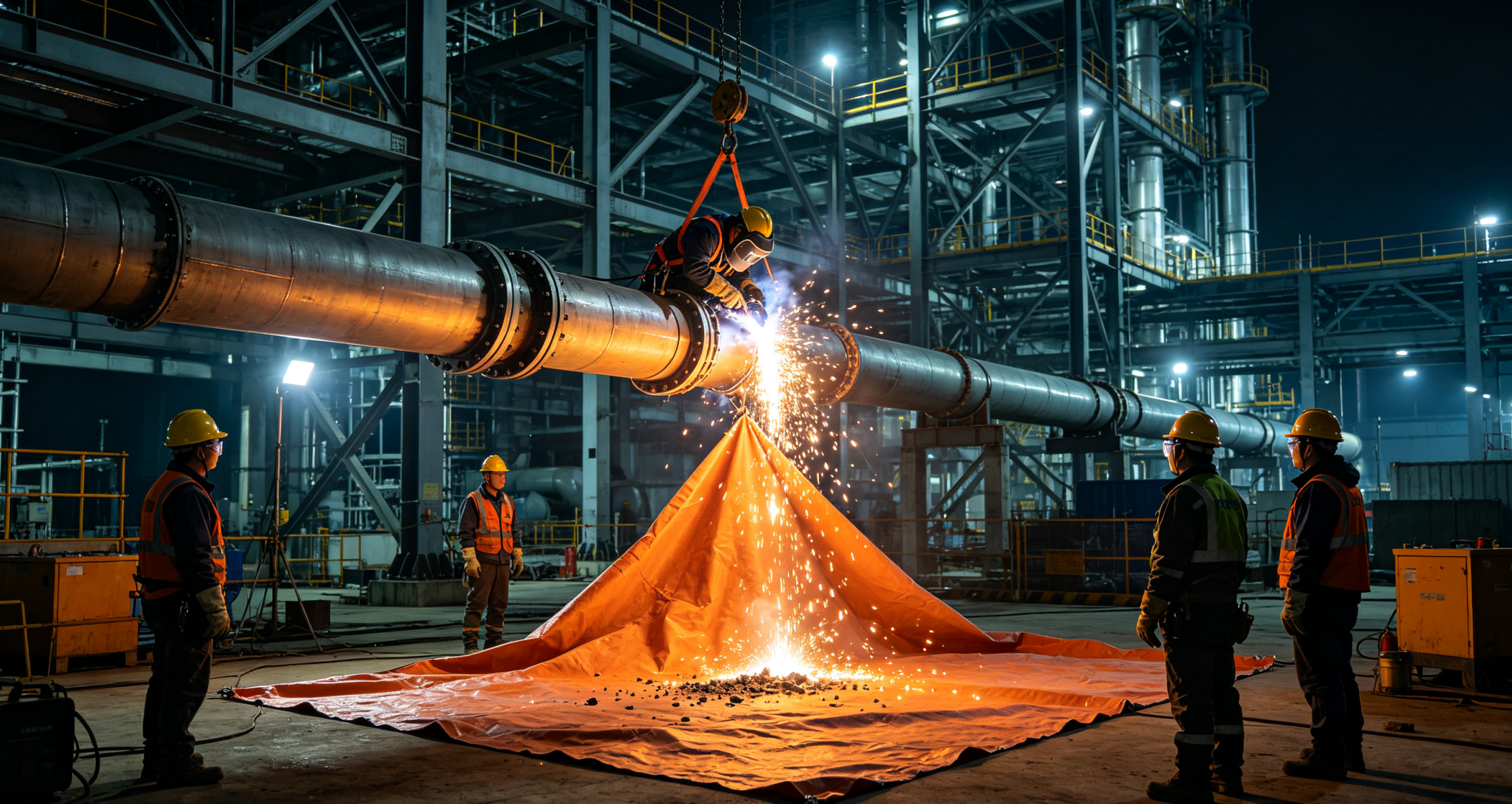
Welding sparks trigger most construction site fires. Even standardized operating procedures carry hidden risks if low-performance flame-retardant fabrics are used. Recent frequent construction fires sound alarms for hot work safety. Most welding-caused blazes stem from inadequate high-temperature slag shielding and substandard fire-resistant materials, rather than improper operation alone. Welding arcs hit over 6,000°C, with flying […]
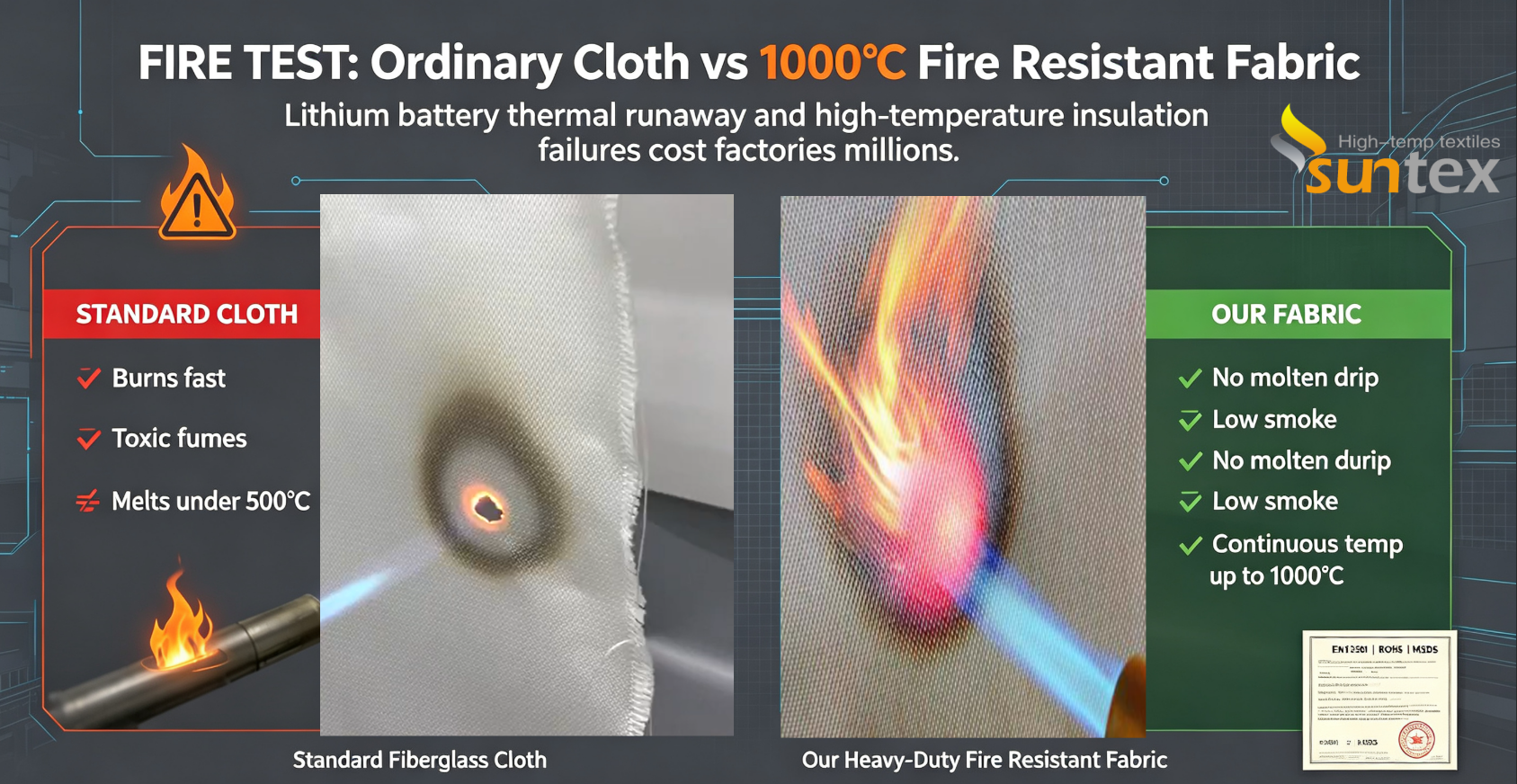
The Hidden Cost of Inferior Thermal Insulation Lithium battery thermal runaway and industrial high-temperature insulation failures frequently trigger factory fires, unplanned shutdowns and massive economic losses. Most of these accidents stem from low-performance standard insulation materials, rather than major equipment faults. Substandard fiberglass cloth fails under high heat, accelerating fire spread and causing costly industrial […]


 English
 Arabic
 Dutch
Dutch French
 German
 Italian
 Polish
 Portuguese
 Russian
 Spanish