

Thousand-Degree Flames, Impossible to Advance! The Secret of Fireproofing Marvels in Maritime Operations
Facing flying sparks and extreme heat over a thousand degrees, what seems like an ordinary fireproof cloth actually serves as the “last line of defense” for safety during ship and offshore platform operations.
In shipbuilding, repair, and offshore oil platform operations, “hot work” is synonymous with high risk—sparks generated from welding, cutting, and grinding reach extremely high temperatures, while flammable and explosive substances such as liquefied petroleum gas and chemicals are ever-present inside cargo ships. A single moment of negligence could lead to a catastrophic accident.
The emergence of professional fireproof blankets is transforming the safety landscape in these industries.
01 On the Edge of Danger: Ubiquitous Fire Hazards in Maritime Operations
Shipbuilding and offshore oil platforms are among the most demanding industrial environments in terms of safety requirements. Invisible dangers lurk everywhere: liquefied petroleum gas, bulk hazardous chemicals, fuel oil, lubricating oil—each one a potential “bomb.”
This is especially true for liquefied gas carriers and chemical tankers, where residual flammable gas or liquid molecules may remain in connected piping systems. If sparks from hot work come into contact with these substances, the consequences would be unthinkable.
Traditional fire prevention methods often have limitations: ordinary fire-resistant materials struggle to withstand sustained high temperatures, metal barriers are heavy and inconvenient to install, and corrosive environments significantly shorten the lifespan of many materials.
02 The True Guardian: How Professional Fireproof Blankets Build a Safety Barrier
In such demanding environments, professional-grade fireproof blankets demonstrate their irreplaceable value.
Their core advantage lies in their “specialized design”: made from special materials like fiberglass and treated with professional techniques, they can withstand flame temperatures of up to 1000°C, forming an effective fire barrier that isolates sparks, heat radiation, and flames within specific work areas.
Anti-corrosion performance is another highlight. The high-salt, high-humidity offshore environment is highly corrosive to materials. Through special coating treatments, professional fireproof blankets resist corrosion, ensuring longevity and protective effectiveness even in harsh conditions.
Their lightweight and flexible nature solves installation challenges. Compared to traditional fireproofing devices, these blankets can be quickly deployed and moved, adapting to various complex workspaces and providing workers with a movable safety barrier.

03 Tested in Practice: Key Applications of Fireproof Blankets in Diverse Scenarios
In practical operations, the applications of professional fireproof blankets are far more extensive than one might imagine.
In shipbuilding and repair, they are used to isolate welding areas, protecting surrounding flammable equipment and materials. During maintenance of liquefied gas carriers, they provide essential safety guarantees for hot work.
On offshore oil platforms, professional fireproof curtains can demarcate safe zones, preventing the spread of fires and buying precious time for evacuation and firefighting.
Particularly in situations where adjacent oil tanks cannot be emptied, fireproof blankets become a prerequisite for permitting hot work, directly impacting project progress and operational safety.
04 Selection Criteria: How to Identify Truly Professional Fireproof Blankets
With a wide array of fireproof products on the market, how can one choose a professional fireproof blanket truly suited for maritime and offshore operations?
The primary criterion is heat resistance. The material must withstand sustained high temperatures without being penetrated or damaged. Certification is also indispensable—checking whether the product has passed relevant industry certifications and fire safety tests is key to judging its reliability.
Environmental adaptability is equally critical. In offshore environments, the material’s anti-corrosion and waterproof properties must meet requirements; otherwise, its service life will be significantly reduced.
Practical functionality cannot be overlooked. Ease of installation, flexibility in use, and maintainability all directly impact actual performance.
Not only in shipbuilding but also in high-risk industries such as petrochemicals and power construction, this fireproof technology is being adopted. With advancements in materials science, future fireproof blankets will become lighter, more durable, and offer even better protection.
There are no shortcuts to safety, but technology can make safety simpler. Choosing professional protection is choosing to take responsibility for lives.
Contact Details
Suntex Composite Industrial Co., Ltd.
Contact Person: Mr. Jason Hu
Tel: +86 132 0712 7986

Send your inquiry directly to us
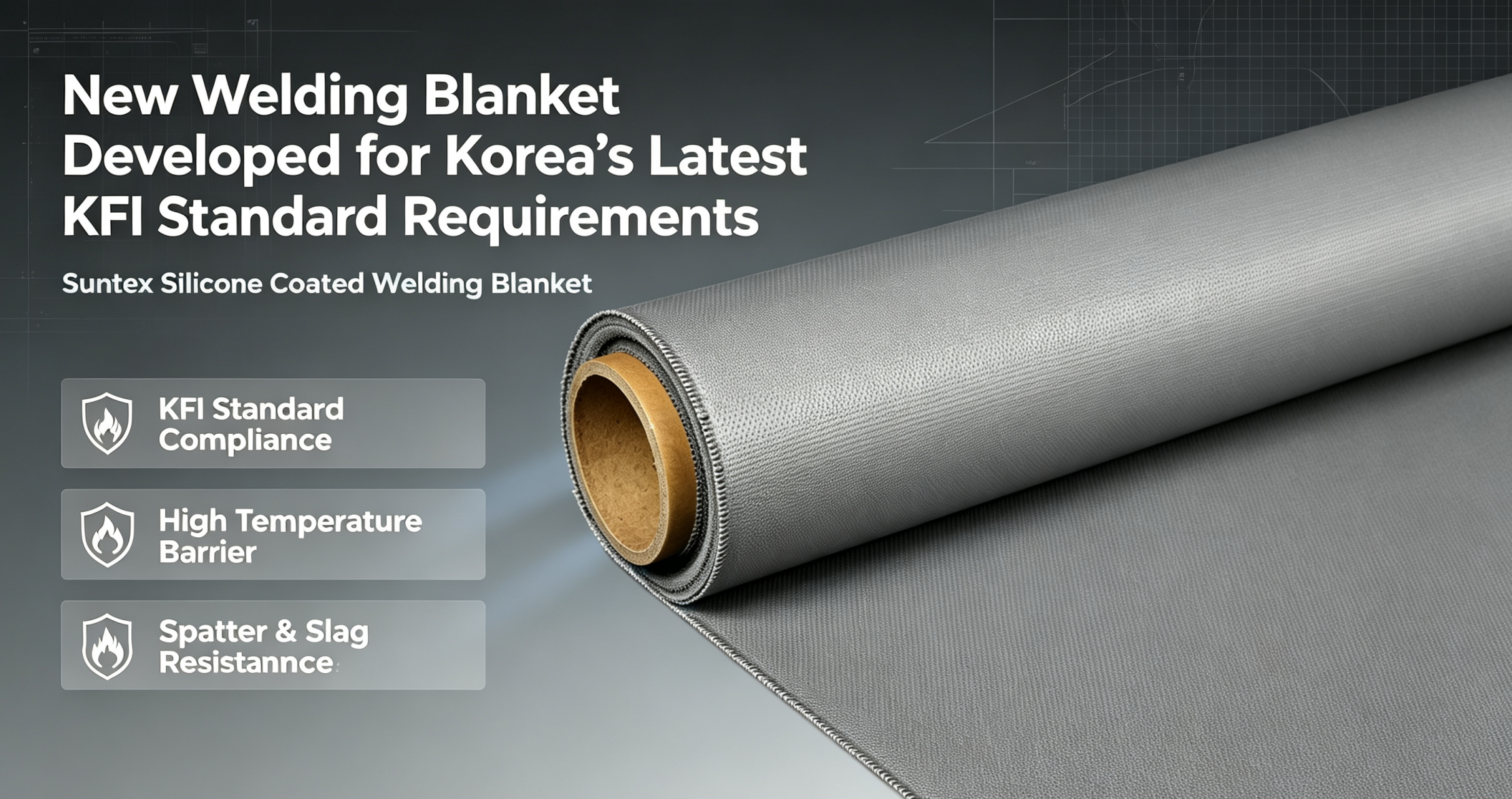
New Welding Blanket Developed for Korea’s Latest KFI Standard Requirements Suntex launches upgraded grey silicone-coated fiberglass welding blankets fully compliant with Korea’s latest KFI fire safety standards for hot work. Made of premium grey silicone coated fiberglass rolls, our blankets deliver reliable protection against welding sparks, molten slag, and high heat for welding, cutting, and […]
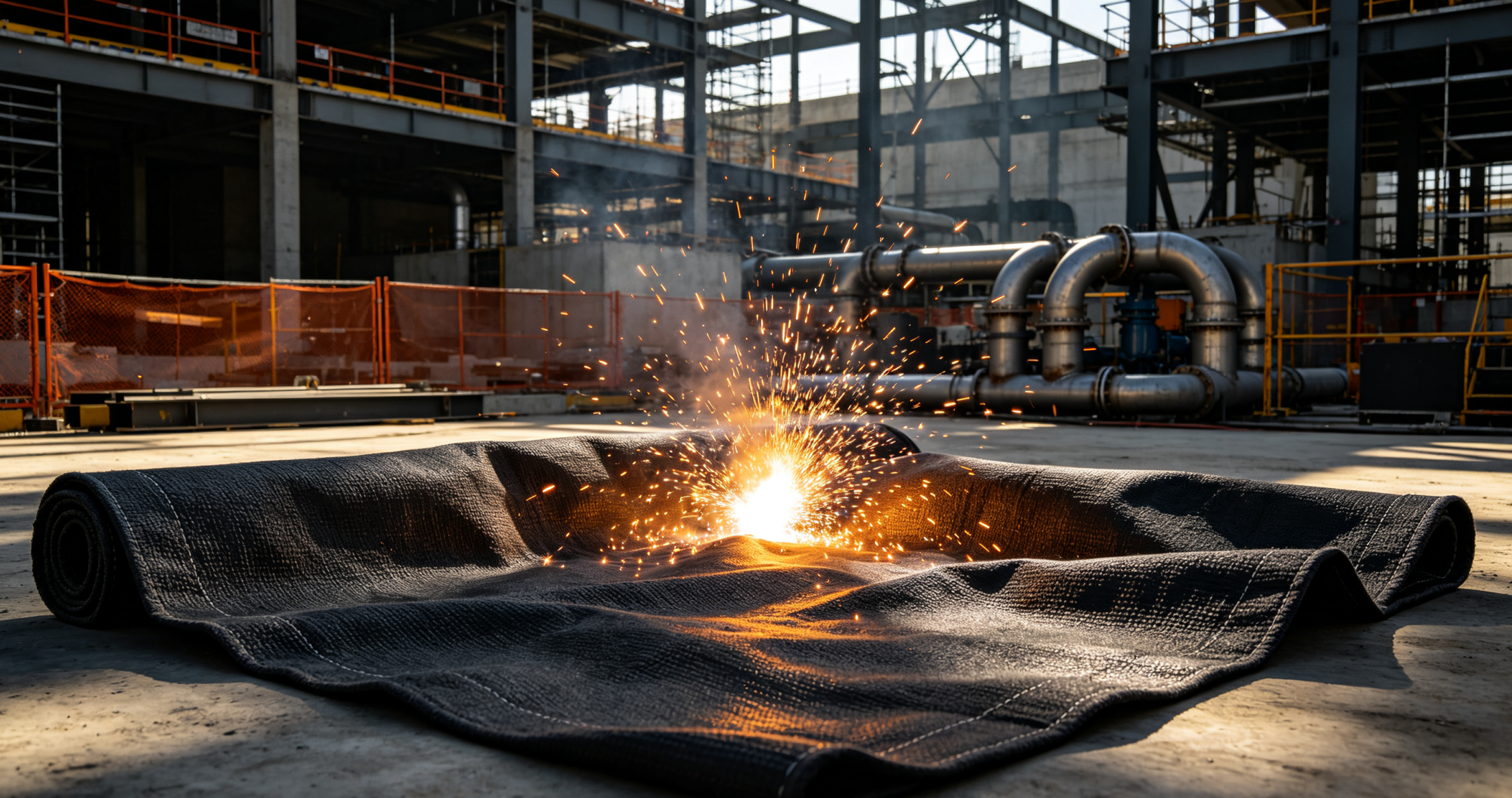
In the high-stakes environment of Japanese automotive manufacturing and precision machining, “good enough” is never enough. When a single stray spark can lead to costly downtime or compromise the integrity of automated assembly lines, the quality of your protective gear is a direct reflection of your operational safety standards. For facilities prioritizing fire prevention and […]
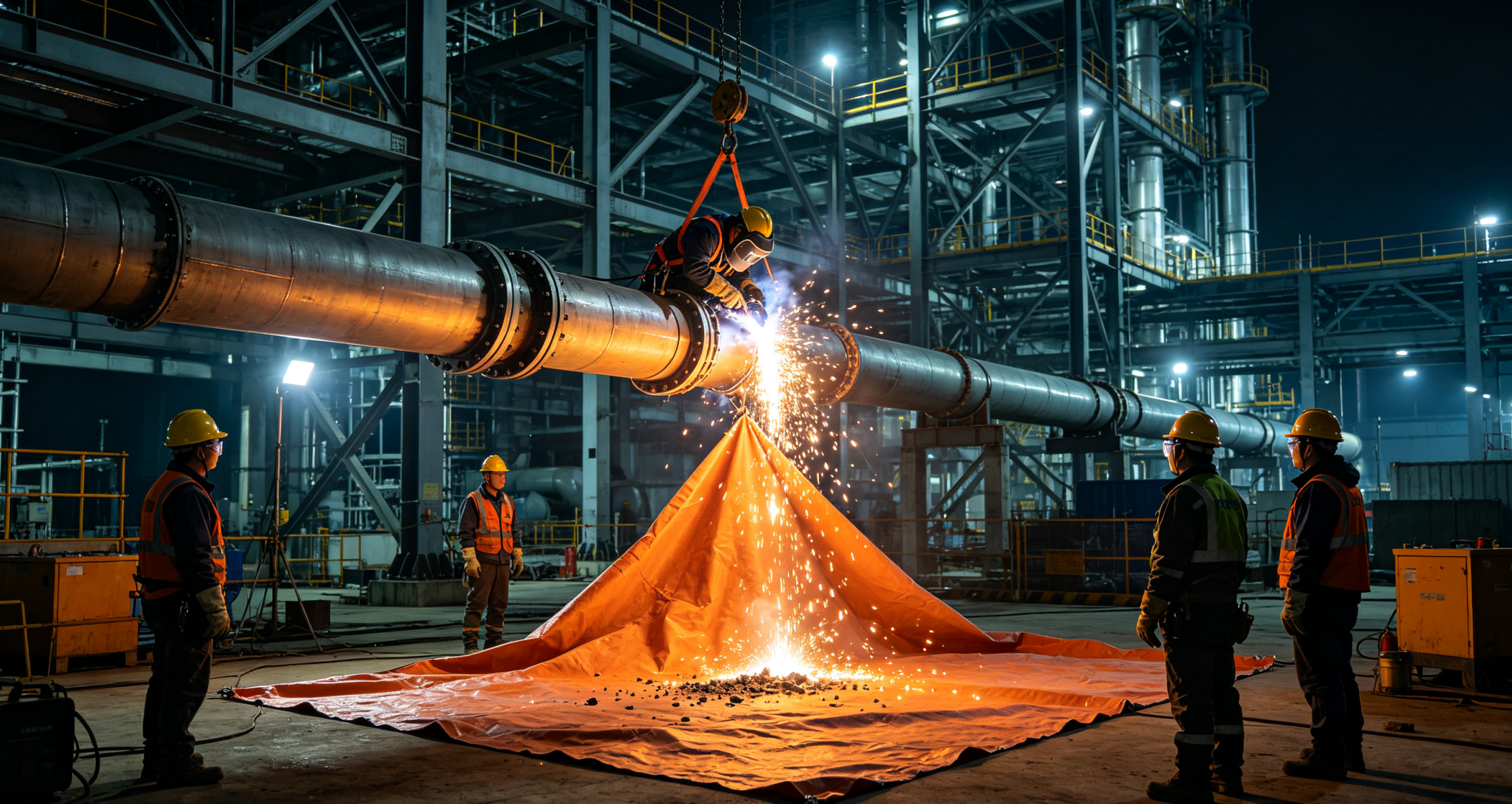
Welding sparks trigger most construction site fires. Even standardized operating procedures carry hidden risks if low-performance flame-retardant fabrics are used. Recent frequent construction fires sound alarms for hot work safety. Most welding-caused blazes stem from inadequate high-temperature slag shielding and substandard fire-resistant materials, rather than improper operation alone. Welding arcs hit over 6,000°C, with flying […]
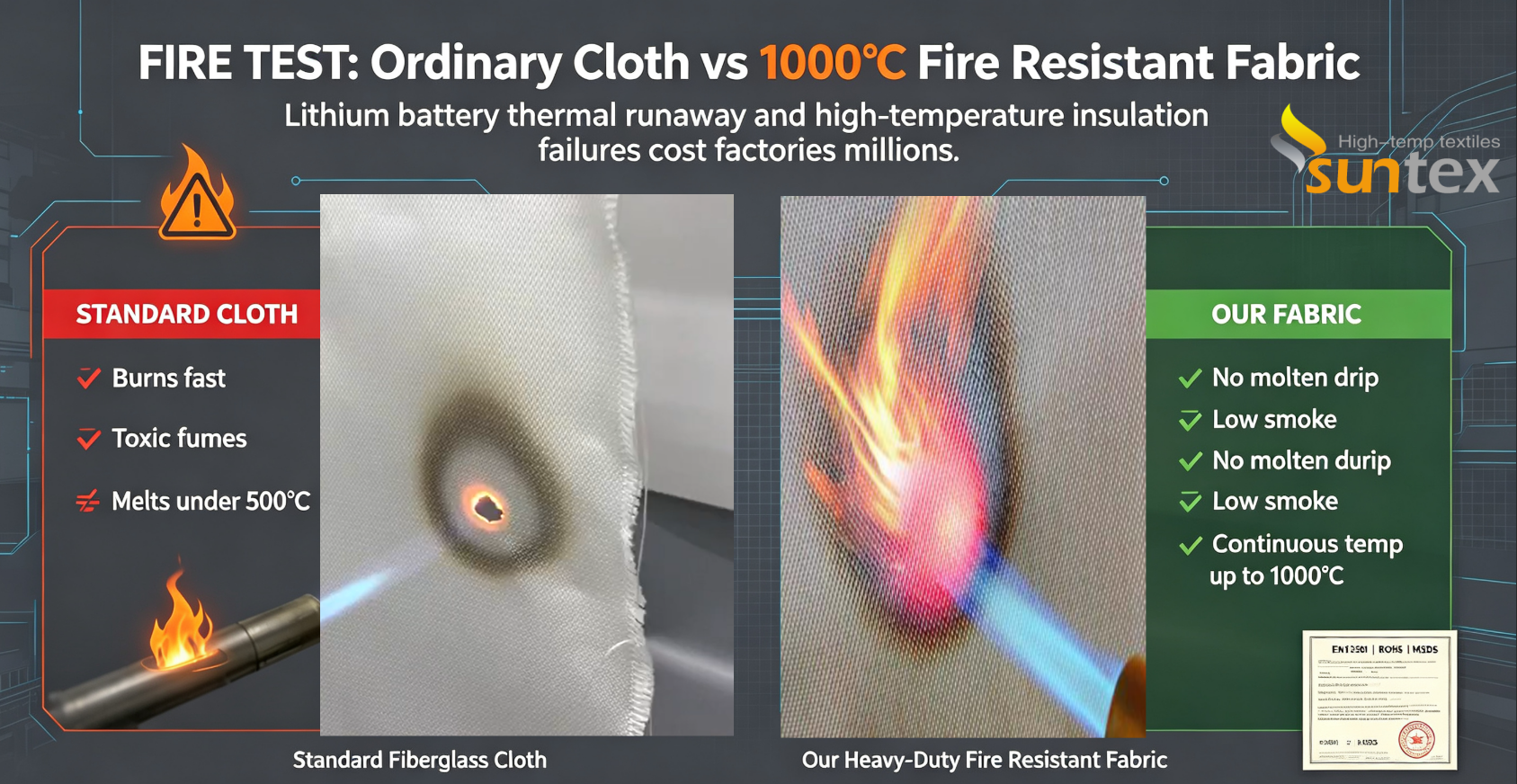
The Hidden Cost of Inferior Thermal Insulation Lithium battery thermal runaway and industrial high-temperature insulation failures frequently trigger factory fires, unplanned shutdowns and massive economic losses. Most of these accidents stem from low-performance standard insulation materials, rather than major equipment faults. Substandard fiberglass cloth fails under high heat, accelerating fire spread and causing costly industrial […]


 English
 Arabic
 Dutch
Dutch French
 German
 Italian
 Polish
 Portuguese
 Russian
 Spanish