

It is a great honor to introduce knowledge about fiberglass fireproof cloth.

Fiberglass fireproof cloth is a widely used and high-performance reinforcing material. It is a type of glass fiber fabric with a fireproof coating, produced through processes such as impregnation and coating, making it a high-performance, versatile new composite material product.
What are the characteristics of fiberglass fireproof cloth?
01. UV and static electricity resistance.
02. Excellent mechanical properties and high strength.
03. Resistance to aqua regia, strong acids, strong alkalis, and organic solvents.
04. Non-stick properties.
05. Usable in temperatures ranging from -196°C to 300°C.
06. Good light transmittance.
07. Excellent vibration damping performance.
08. Good plasticity, allowing it to be shaped into any form based on mold designs.
Compared to traditional materials, composite materials offer advantages in toughness, corrosion resistance, wear resistance, and temperature tolerance. They are lightweight, high-strength, highly design-flexible, easy to process and shape, and have a low friction coefficient. They also exhibit good fatigue resistance, among other characteristics.
It can be widely used in prepreg processes, treated with epoxy resin adhesive through impregnation, rolling, heat baking, film laminating, and winding processes. After being formed into products, it is cured and shaped. After curing, its flame retardancy reaches a 94V0 rating.
Application fields: Shipbuilding, electronics and electrical, aerospace, military and defense, chemical industry, wind energy, infrastructure, construction, automotive, sports and leisure, etc.
Fiberglass fireproof cloth can be classified into various types based on its weaving method and surface treatment, such as plain weave, twill weave, and satin weave.
Among them, plain weave cloth features tight weaving and high strength, making it suitable for insulation applications with high requirements.
Twill weave cloth, on the other hand, offers good flexibility and ease of shaping, making it suitable for insulation applications with complex designs.
The surface treatment methods for fiberglass fireproof cloth also vary, including coating, impregnation, and film laminating, which can enhance its waterproofing, corrosion resistance, and other properties, improving its durability and service life.
Contact Details
Suntex Composite Industrial Co., Ltd.
Contact Person: Mr. Jason Hu
Tel: +86 132 0712 7986

Send your inquiry directly to us
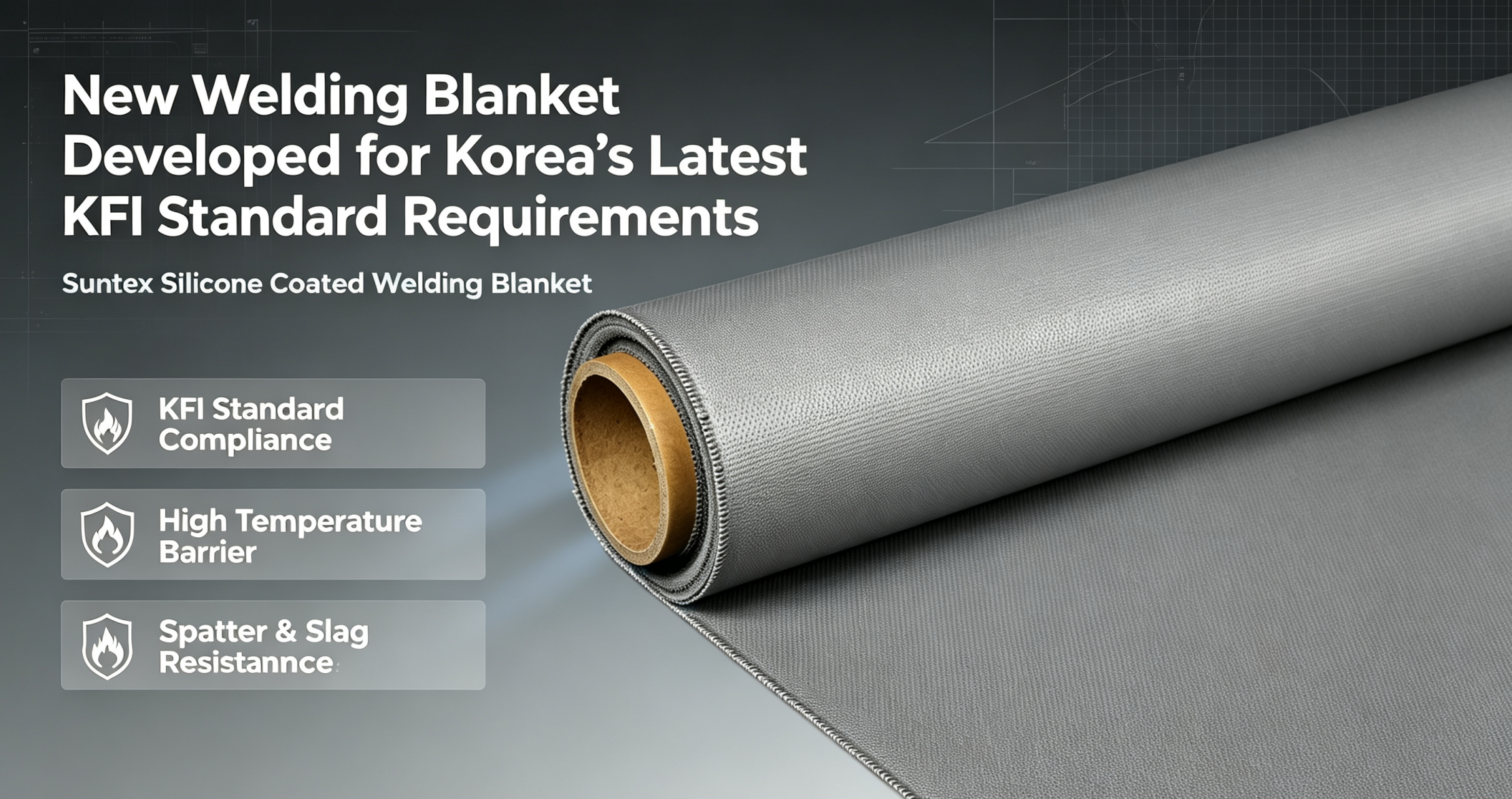
New Welding Blanket Developed for Korea’s Latest KFI Standard Requirements Suntex launches upgraded grey silicone-coated fiberglass welding blankets fully compliant with Korea’s latest KFI fire safety standards for hot work. Made of premium grey silicone coated fiberglass rolls, our blankets deliver reliable protection against welding sparks, molten slag, and high heat for welding, cutting, and […]
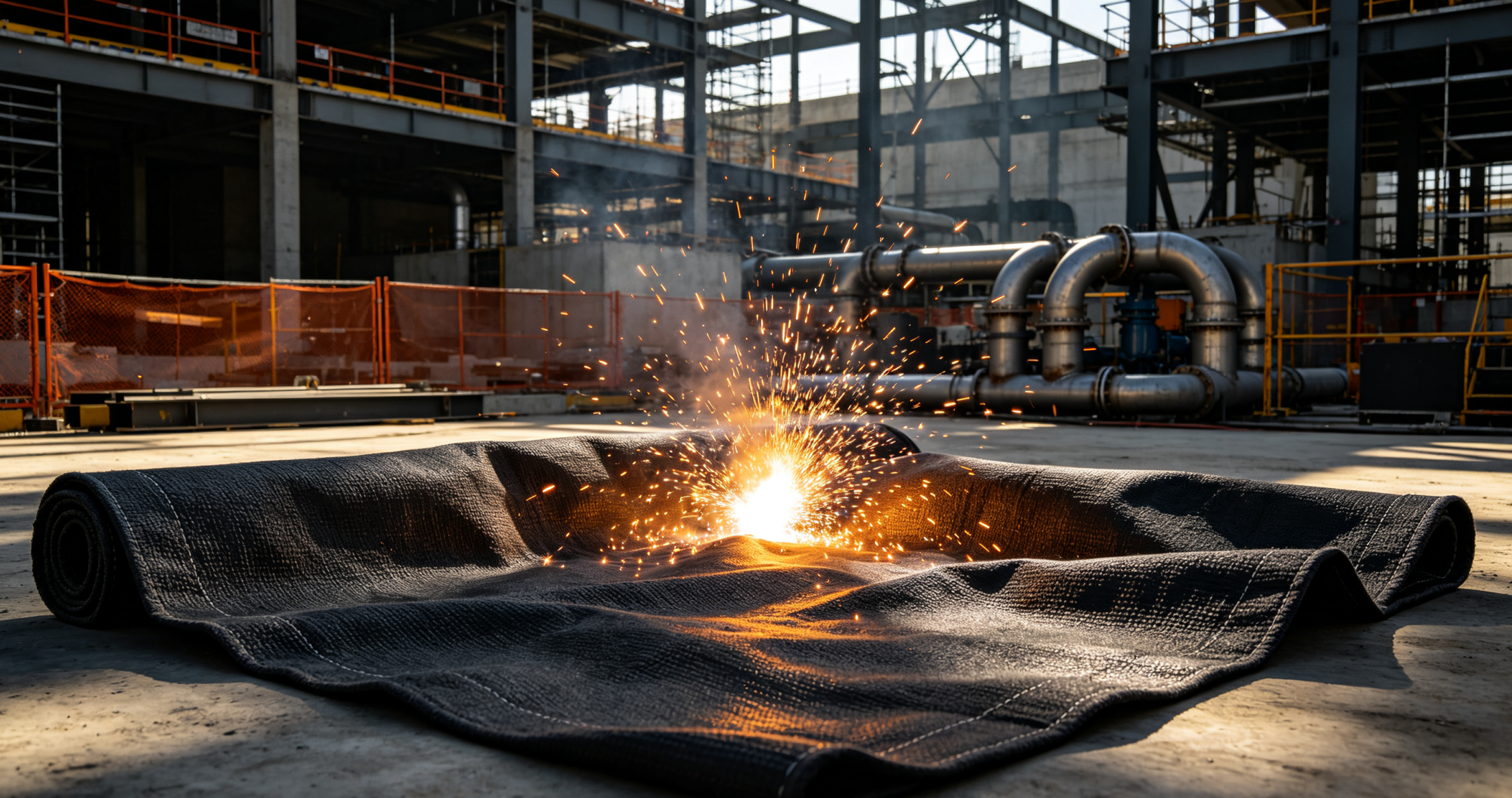
In the high-stakes environment of Japanese automotive manufacturing and precision machining, “good enough” is never enough. When a single stray spark can lead to costly downtime or compromise the integrity of automated assembly lines, the quality of your protective gear is a direct reflection of your operational safety standards. For facilities prioritizing fire prevention and […]
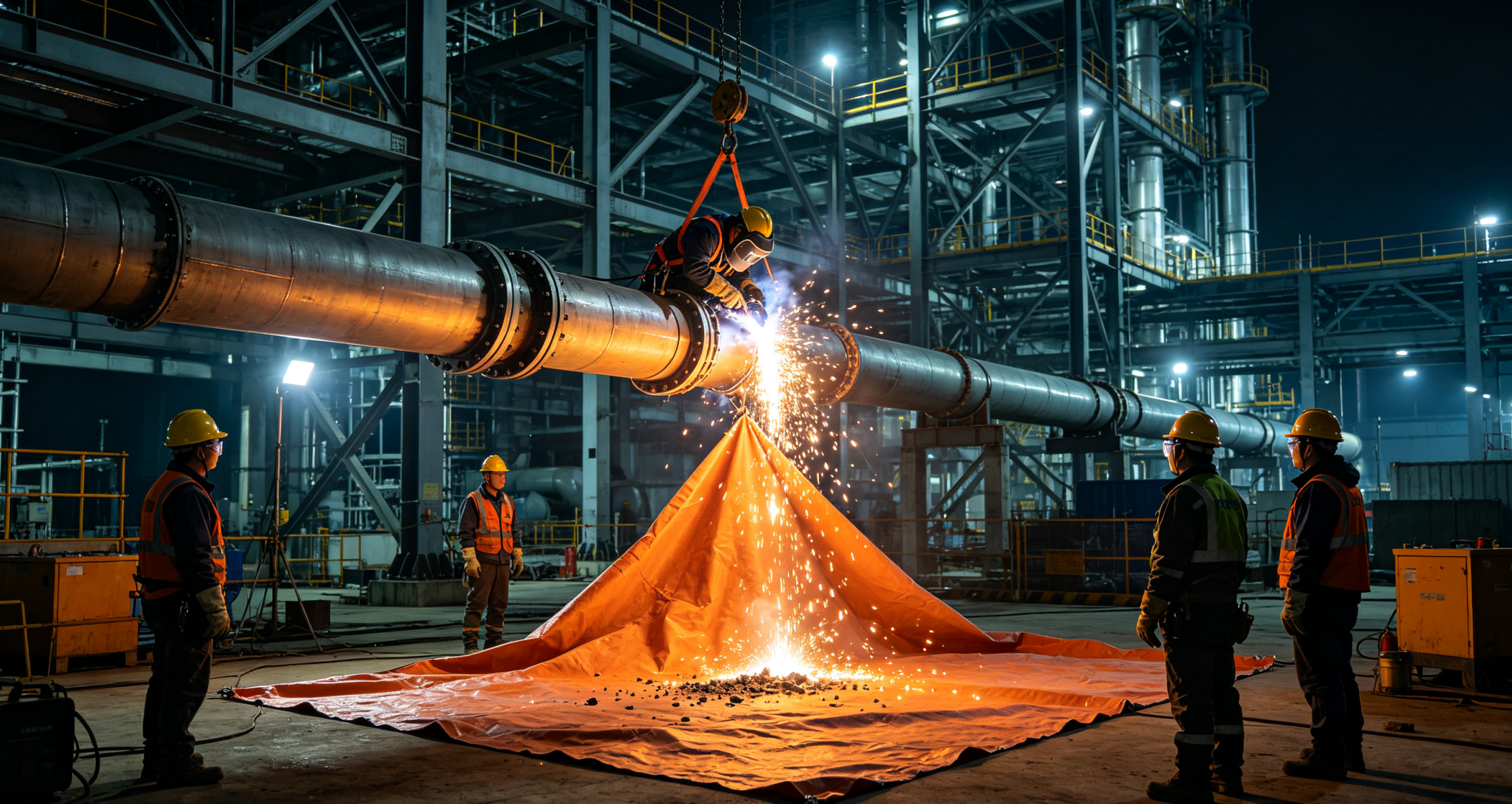
Welding sparks trigger most construction site fires. Even standardized operating procedures carry hidden risks if low-performance flame-retardant fabrics are used. Recent frequent construction fires sound alarms for hot work safety. Most welding-caused blazes stem from inadequate high-temperature slag shielding and substandard fire-resistant materials, rather than improper operation alone. Welding arcs hit over 6,000°C, with flying […]
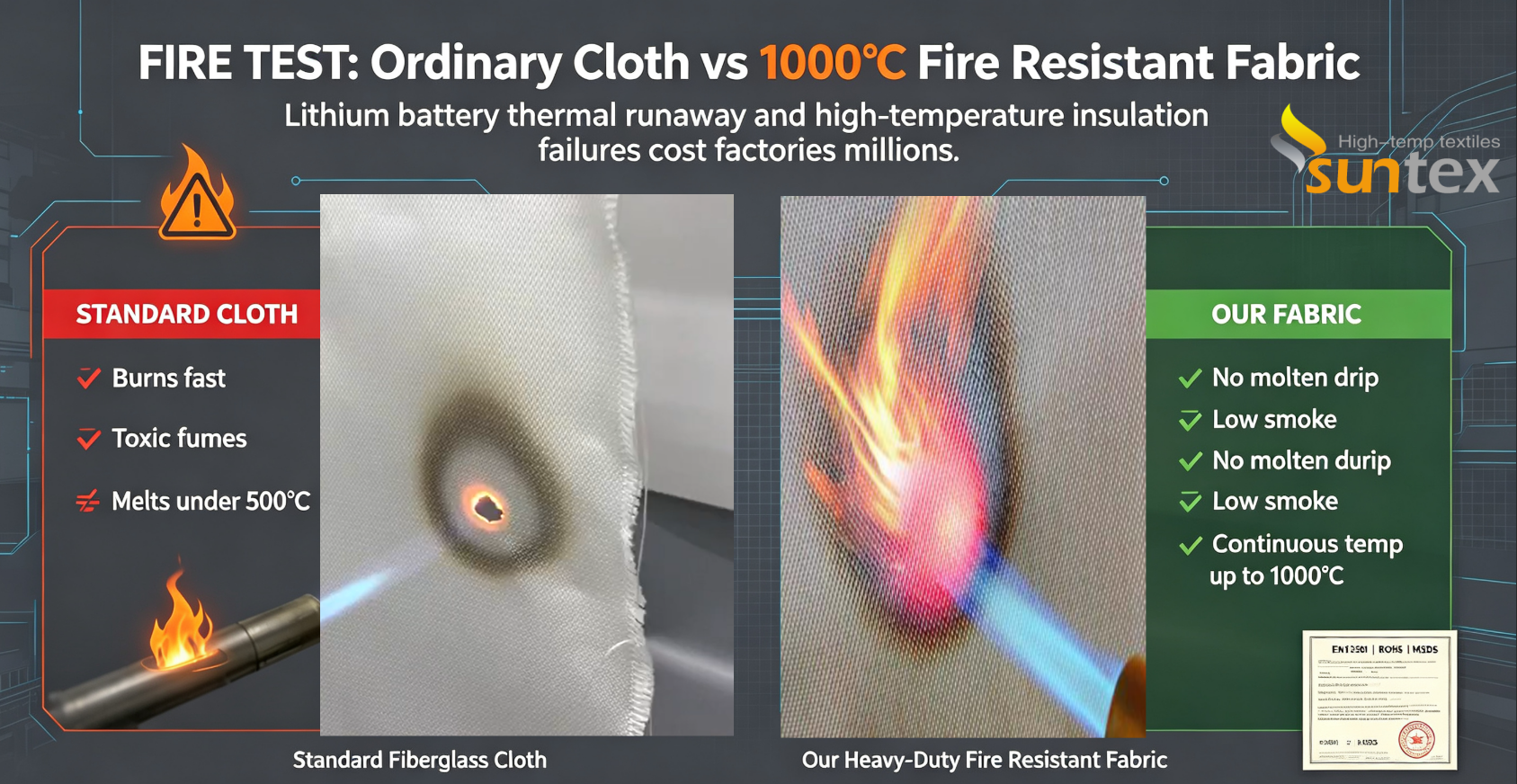
The Hidden Cost of Inferior Thermal Insulation Lithium battery thermal runaway and industrial high-temperature insulation failures frequently trigger factory fires, unplanned shutdowns and massive economic losses. Most of these accidents stem from low-performance standard insulation materials, rather than major equipment faults. Substandard fiberglass cloth fails under high heat, accelerating fire spread and causing costly industrial […]


 English
 Arabic
 Dutch
Dutch French
 German
 Italian
 Polish
 Portuguese
 Russian
 Spanish