

What Is the Greatest Hazard in Construction Site Welding and Cutting? 90% of People Overlook This!
On construction sites, electric welding and gas cutting are operations performed almost every day. The flying sparks and falling slag may look “normal,” but did you know? These seemingly insignificant sparks can reach temperatures exceeding 1000°C.
If they land on cardboard boxes, wood shavings, tarpaulins, insulation materials, or even a worker’s clothing, they can trigger a fire in just a few minutes.
Many people focus on welding techniques, amperage settings, and the aesthetics of the weld seam, yet they overlook the most fundamental—and critical—issue: fire prevention.
Just How High Is the Fire Risk Associated with Welding Operations?
During electric welding and cutting processes, large quantities of high-temperature molten slag and flying sparks are generated. Their temperatures typically range from 800°C to over 1000°C—far exceeding the ignition points of common combustible materials:
Wood: Approx. 250°C–300°C
Paper: Approx. 180°C–230°C
Diesel/Engine Oil: 200°C–400°C
Plastics/Rubber: 300°C–500°C
In other words, if even a single piece of molten slag lands on a flammable object, a fire is almost inevitable.
Even more dangerous is the fact that many fires do not erupt immediately; instead, molten slag falls into crevices, cavities, or piles of debris, smoldering for half an hour—or even several hours—before suddenly bursting into flames. By the time the fire is discovered, it is often already out of control.
Why Is “Laying Down a Sheet of Fabric” Such an Effective Solution?
This is where a welding fireproof cloth (also known as a welding blanket or flame-retardant fabric) becomes critically important.
Its primary function is not merely “fire resistance,” but rather the *isolation* of ignition sources. When laid out around the work area—or draped over equipment and flooring—it effectively blocks sparks, molten slag, and welding splatter, preventing them from coming into contact with combustible materials.
A high-quality welding blanket must meet at least the following three criteria:
1. High-Temperature Resistance: It must not burn through.
A genuine fireproof cloth should be able to withstand continuous exposure to a torch flame—held at a distance of 20–30 millimeters—for over 30 minutes without burning through, catching fire itself, or dripping molten material. If it tears or disintegrates the moment it is exposed to heat, it is nothing more than “ordinary fabric.” 2. Dense and Compact: Resists Puncture
Fireproof fabrics with excessively loose weave structures suffer from poor sealing properties; under high temperatures, molten welding slag can directly burn through the material, endangering personnel or equipment situated underneath, and potentially even triggering a fire.
3. Soft, Durable, and Easy to Handle
A high-quality welding blanket requires both high tensile strength and a soft, pliable texture to facilitate easy laying, folding, and cutting. Thoughtful details—such as reinforced edging, metal grommets, and sturdy handles—can significantly enhance both user convenience and safety.
These locations mandate the Use of Certified Fireproof Fabrics
Beyond standard construction sites, the following types of locations *must* utilize certified fireproof fabrics as a protective barrier whenever “hot work” (operations involving open flames or sparks) is being performed:
Flammable and explosive environments, such as gas stations, chemical plants, and paint storage warehouses.
Shipbuilding and ship repair facilities.
Offshore oil platforms and chemical pipeline zones.
Renovation sites within high-occupancy venues, including shopping malls, hospitals, and schools.
Any welding or cutting operations conducted within designated fire-restricted zones.
What Defines a High-Quality Welding Blanket?
Let’s take SUNTEX welding blankets as an example:
Heat resistance reaching up to 1000°C; remains non-combustible and produces no molten drips when exposed to open flames.
Constructed from a high-density fiberglass base fabric that effectively resists penetration by welding slag.
Features meticulously finished edges that prevent fraying and eliminate the risk of skin irritation (splinters).
Equipped with metal grommets or reinforced handles for convenient hanging and rapid deployment.
Combines multiple protective properties, including fire resistance, thermal insulation, smoke containment, water resistance, and corrosion resistance.
Reusable, cost-effective, and built for long-term durability.
Whether used to drape over equipment, construct a fire-blocking barrier, or serve as a temporary isolation layer during hot work operations, it effectively safeguards both personnel and property.
The cost of a certified fireproof fabric is relatively modest, yet it represents an invisible—and absolutely critical—safety baseline.
Do not let a single spark of welding slag incinerate an entire construction site, destroy a piece of equipment, or—worst of all—claim a human life.
The SUNTEX welding blanket you lay down today could very well be the defensive line that saves everything tomorrow.
Contact Details
Suntex Composite Industrial Co., Ltd.
Contact Person: Mr. Jason Hu
Tel: +86 132 0712 7986

Send your inquiry directly to us
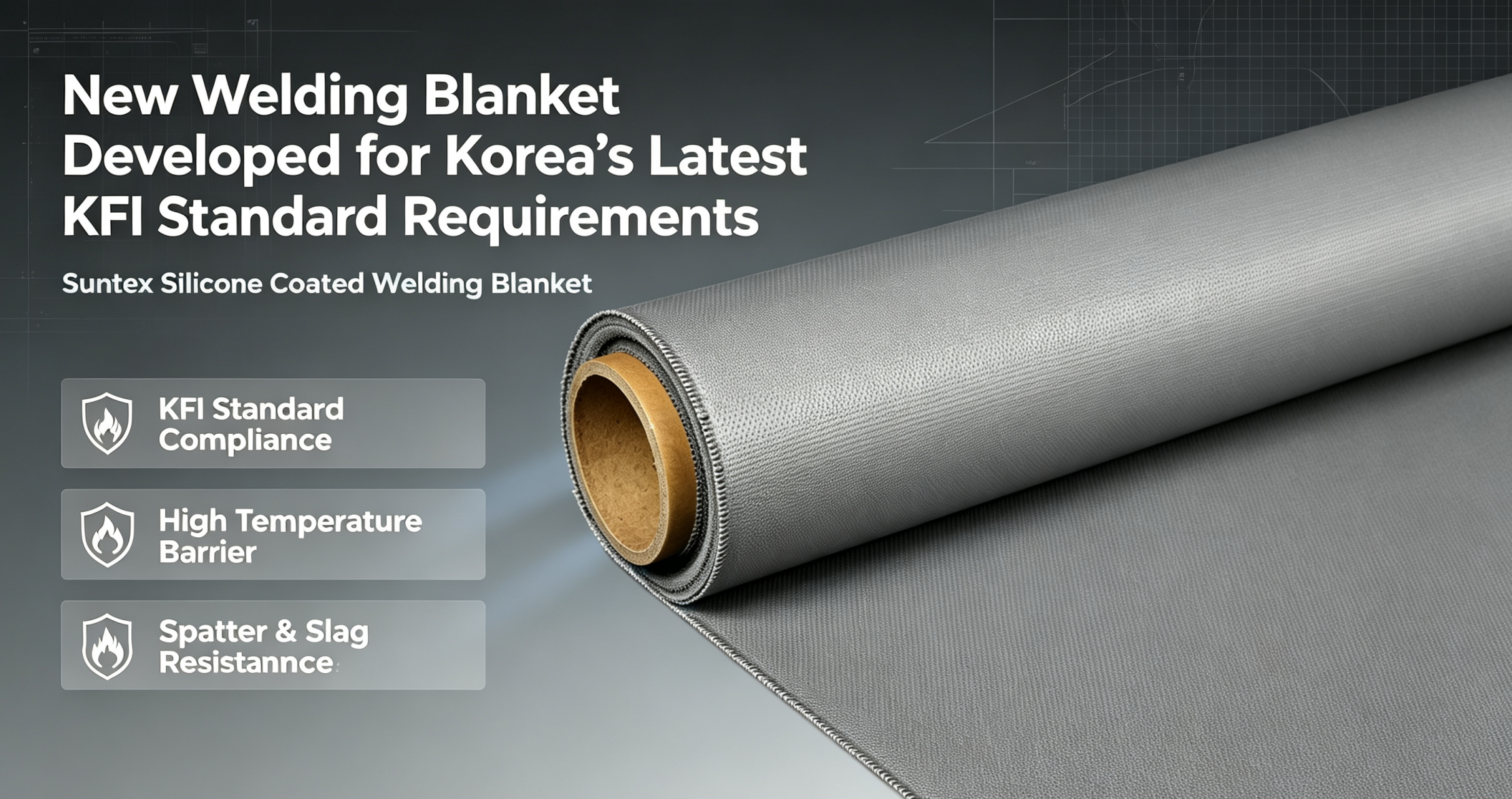
New Welding Blanket Developed for Korea’s Latest KFI Standard Requirements Suntex launches upgraded grey silicone-coated fiberglass welding blankets fully compliant with Korea’s latest KFI fire safety standards for hot work. Made of premium grey silicone coated fiberglass rolls, our blankets deliver reliable protection against welding sparks, molten slag, and high heat for welding, cutting, and […]
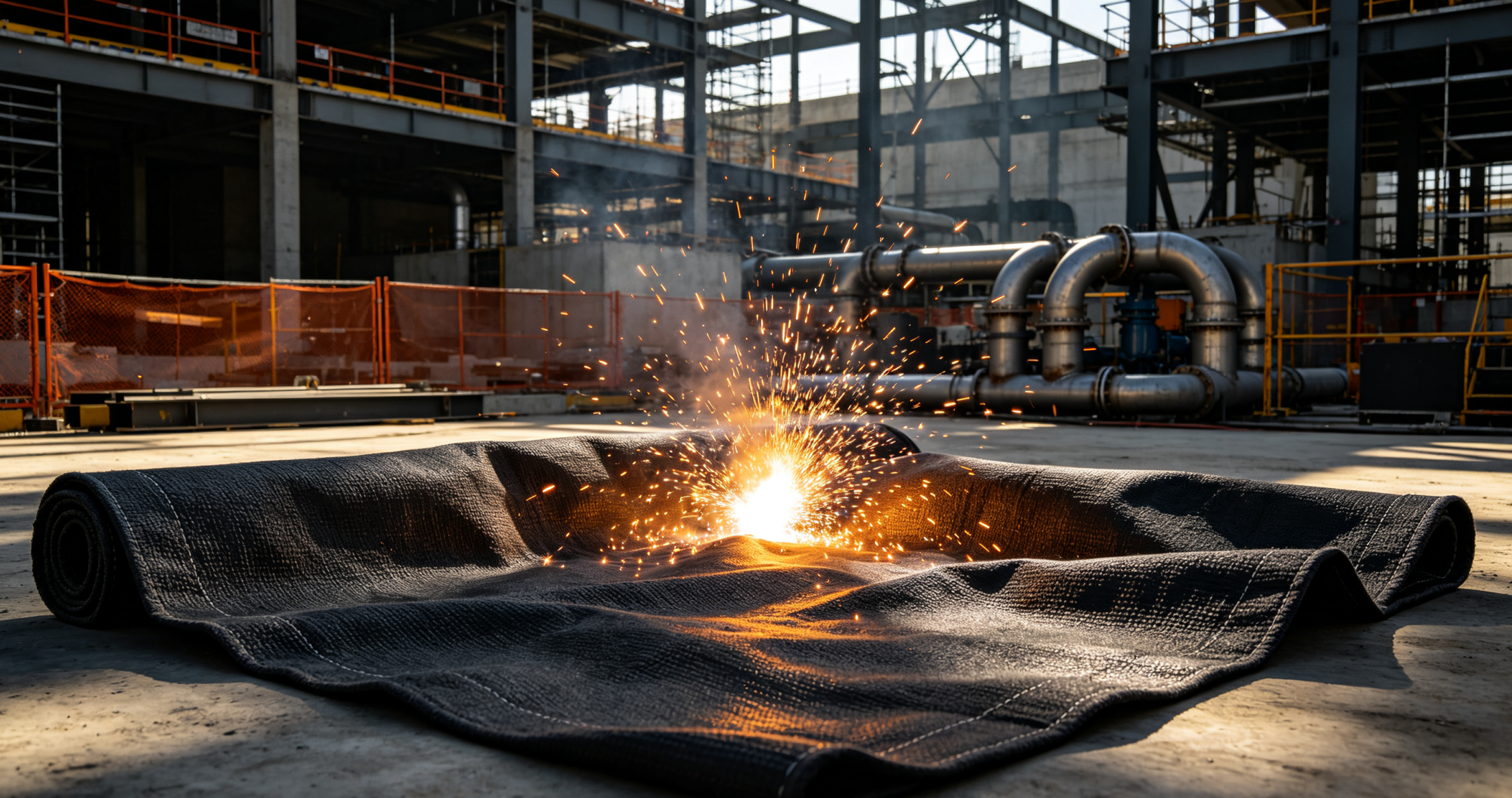
In the high-stakes environment of Japanese automotive manufacturing and precision machining, “good enough” is never enough. When a single stray spark can lead to costly downtime or compromise the integrity of automated assembly lines, the quality of your protective gear is a direct reflection of your operational safety standards. For facilities prioritizing fire prevention and […]
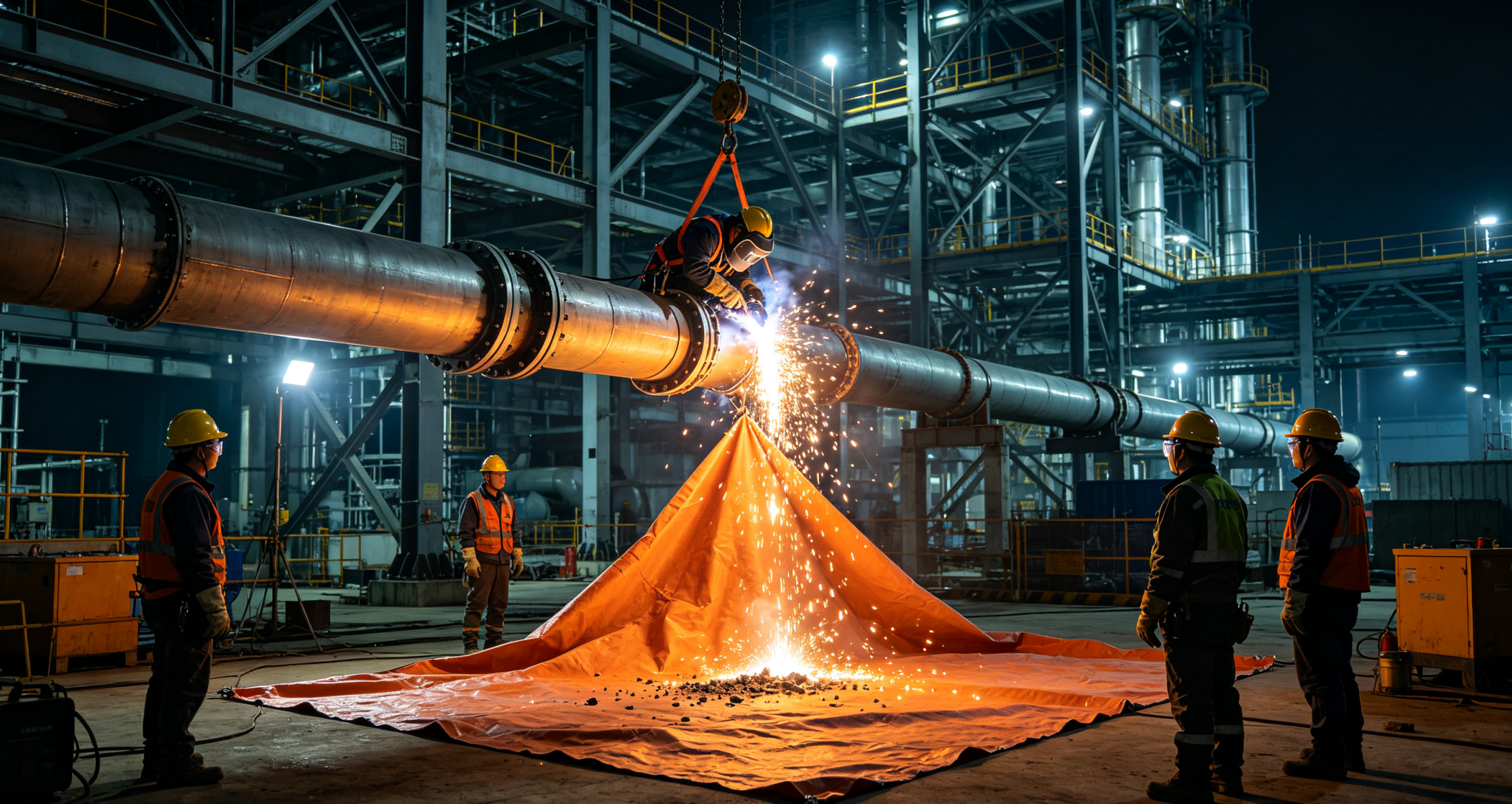
Welding sparks trigger most construction site fires. Even standardized operating procedures carry hidden risks if low-performance flame-retardant fabrics are used. Recent frequent construction fires sound alarms for hot work safety. Most welding-caused blazes stem from inadequate high-temperature slag shielding and substandard fire-resistant materials, rather than improper operation alone. Welding arcs hit over 6,000°C, with flying […]
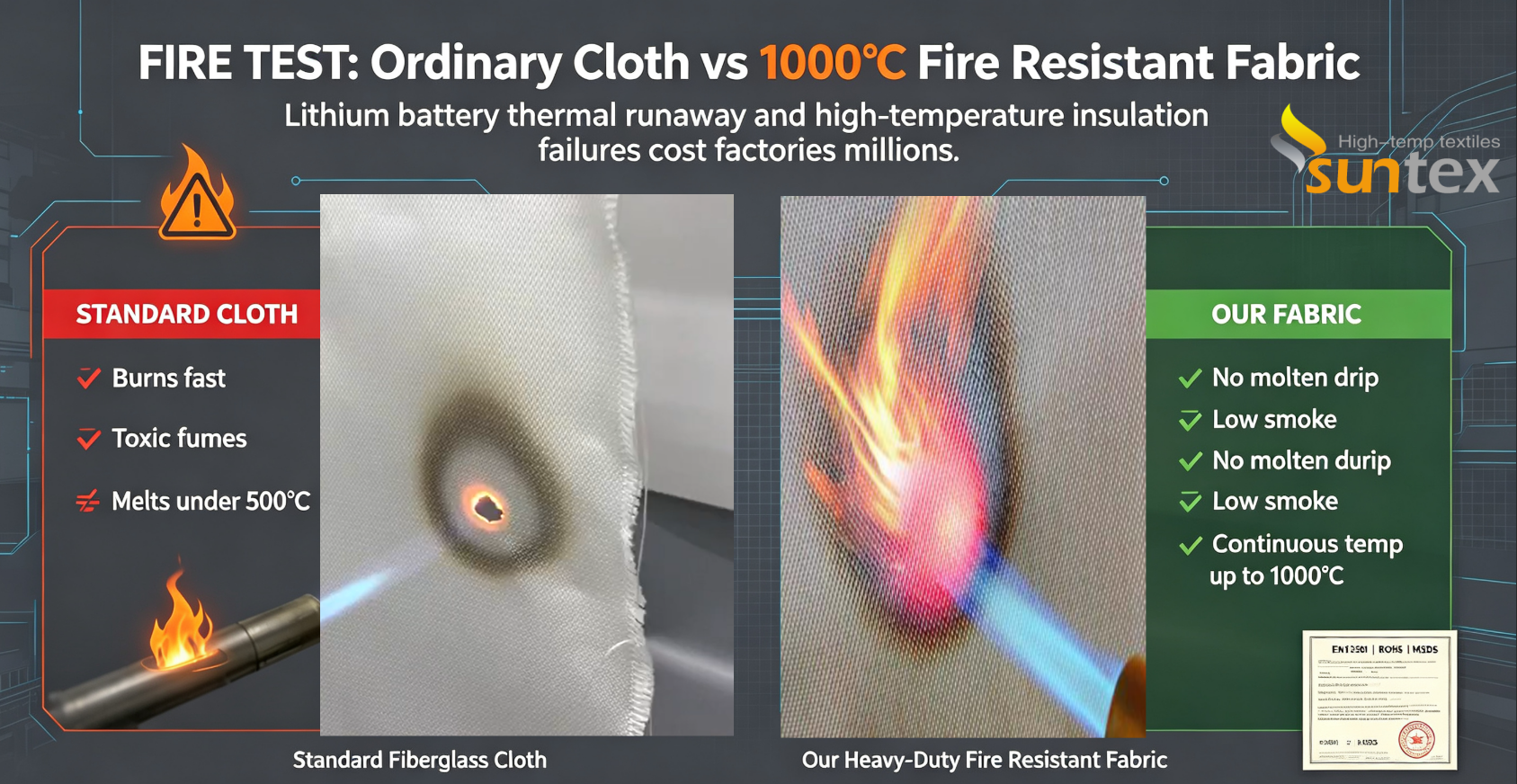
The Hidden Cost of Inferior Thermal Insulation Lithium battery thermal runaway and industrial high-temperature insulation failures frequently trigger factory fires, unplanned shutdowns and massive economic losses. Most of these accidents stem from low-performance standard insulation materials, rather than major equipment faults. Substandard fiberglass cloth fails under high heat, accelerating fire spread and causing costly industrial […]


 English
 Arabic
 Dutch
Dutch French
 German
 Italian
 Polish
 Portuguese
 Russian
 Spanish