

Why is the quality of fiberglass fireproof fabric from Chinese factories so good and cost-effective?

The high quality and cost-effectiveness of fiberglass fireproof fabric produced by Chinese factories stem from a combination of the following advantages:
1. Mature Industry Chain and Large-Scale Production
Complete Supply Chain: China has a well-established industrial chain, from raw materials (such as quartz sand and boric acid) to finished product processing, ensuring stable and cost-controlled material supply.
Economies of Scale: Large factories reduce unit costs through mass production, while the widespread use of automated equipment improves efficiency and product consistency.

2. Advanced Manufacturing Technology and Processes
Process Optimization: China’s fiberglass industry continues to adopt and refine production techniques (e.g., fiber drawing, weaving, and coating), ensuring high strength, heat resistance (typically above 500°C), and corrosion resistance.
Technological Innovation: Some manufacturers have developed composite coating technologies (e.g., silicone rubber or ceramic coatings), further enhancing flame retardancy (meeting international standards like ASTM E84 and EN13501) and durability.

3. Strict Quality Control and Certifications
International Certifications: Leading Chinese factories comply with ISO 9001, UL, CE, and other global standards, with some meeting military or aerospace-grade requirements.
Quality Inspection Systems: Comprehensive testing (e.g., combustion tests, tensile strength tests) from raw materials to finished products ensures consistent quality.

4. Cost Advantages
Labor and Energy Costs: Compared to Western countries, China benefits from lower labor and energy expenses, while large-scale production further reduces costs.
Government Support: Policies such as export tax rebates and subsidies for technological upgrades indirectly lower operational costs.

5. Market Demand-Driven Improvements
Strong Domestic Demand: Sectors like construction, metallurgy, and fire protection in China drive continuous advancements in fireproof materials.
Export-Oriented Production: Chinese factories frequently handle international orders, familiarizing themselves with standards in markets like Europe, North America, and Southeast Asia, making their products more tailored to global needs.

6. Flexible Service and Customization Capabilities
Chinese manufacturers often provide rapid customization (e.g., varying thicknesses, colors, and coatings) to meet diverse client needs while maintaining competitive pricing.

Example
For instance, a well-known Chinese brand of fiberglass fireproof fabric may offer similar fire resistance (e.g., withstanding 600°C for over 2 hours) at 50%-70% of the price of comparable Western products, along with support for small-batch customization—making it highly attractive in the global market.
Conclusion
The high cost-performance ratio of Chinese fiberglass fireproof fabric results from a synergy of technology, cost efficiency, industrial chain strength, and policy support. It meets global demand for high-performance fireproof materials while maintaining affordability. With further advancements in green manufacturing and smart production, China’s competitiveness in this field is likely to grow even stronger.
Contact Details
Suntex Composite Industrial Co., Ltd.
Contact Person: Mr. Jason Hu
Tel: +86 132 0712 7986

Send your inquiry directly to us
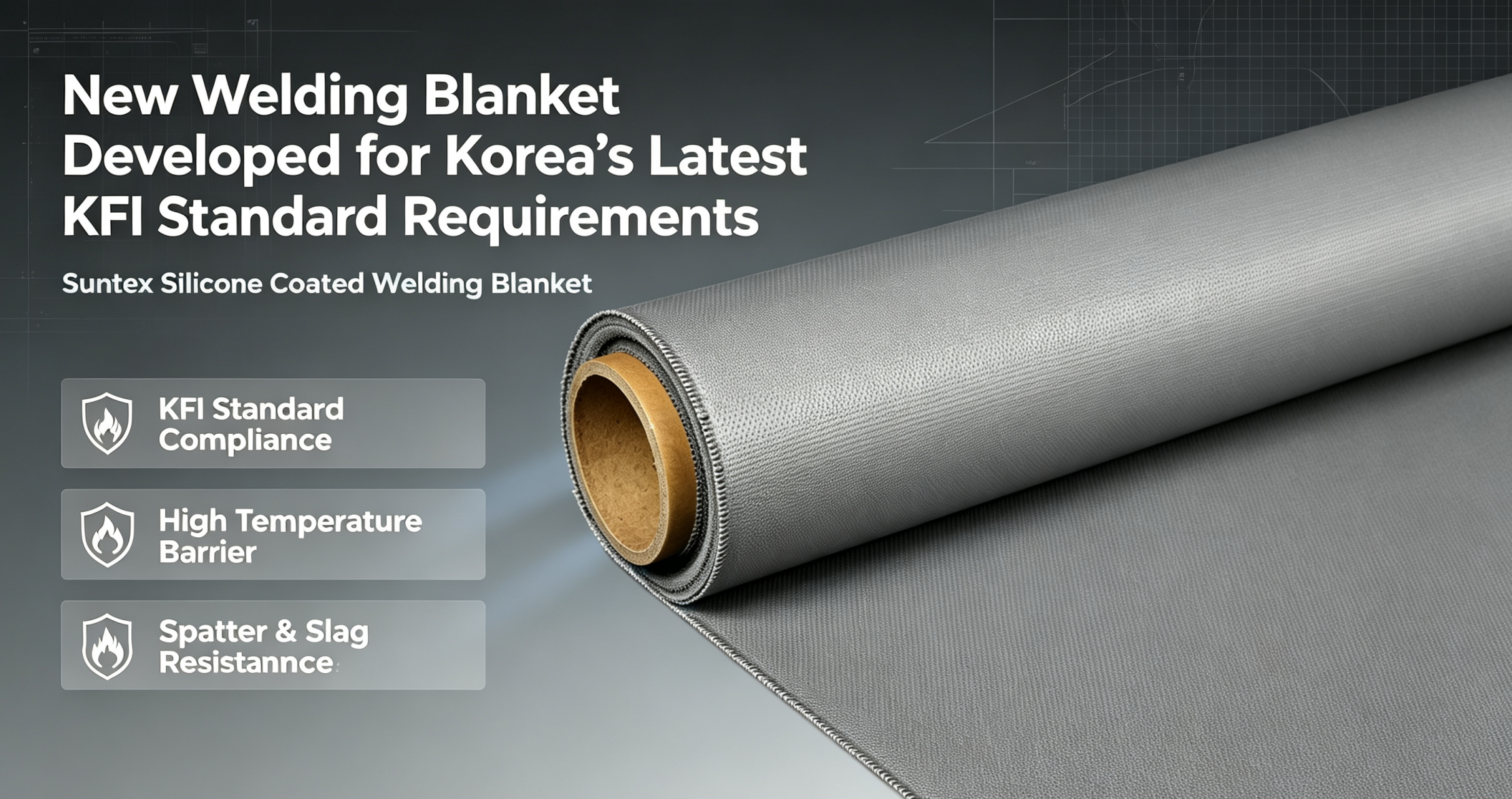
New Welding Blanket Developed for Korea’s Latest KFI Standard Requirements Suntex launches upgraded grey silicone-coated fiberglass welding blankets fully compliant with Korea’s latest KFI fire safety standards for hot work. Made of premium grey silicone coated fiberglass rolls, our blankets deliver reliable protection against welding sparks, molten slag, and high heat for welding, cutting, and […]
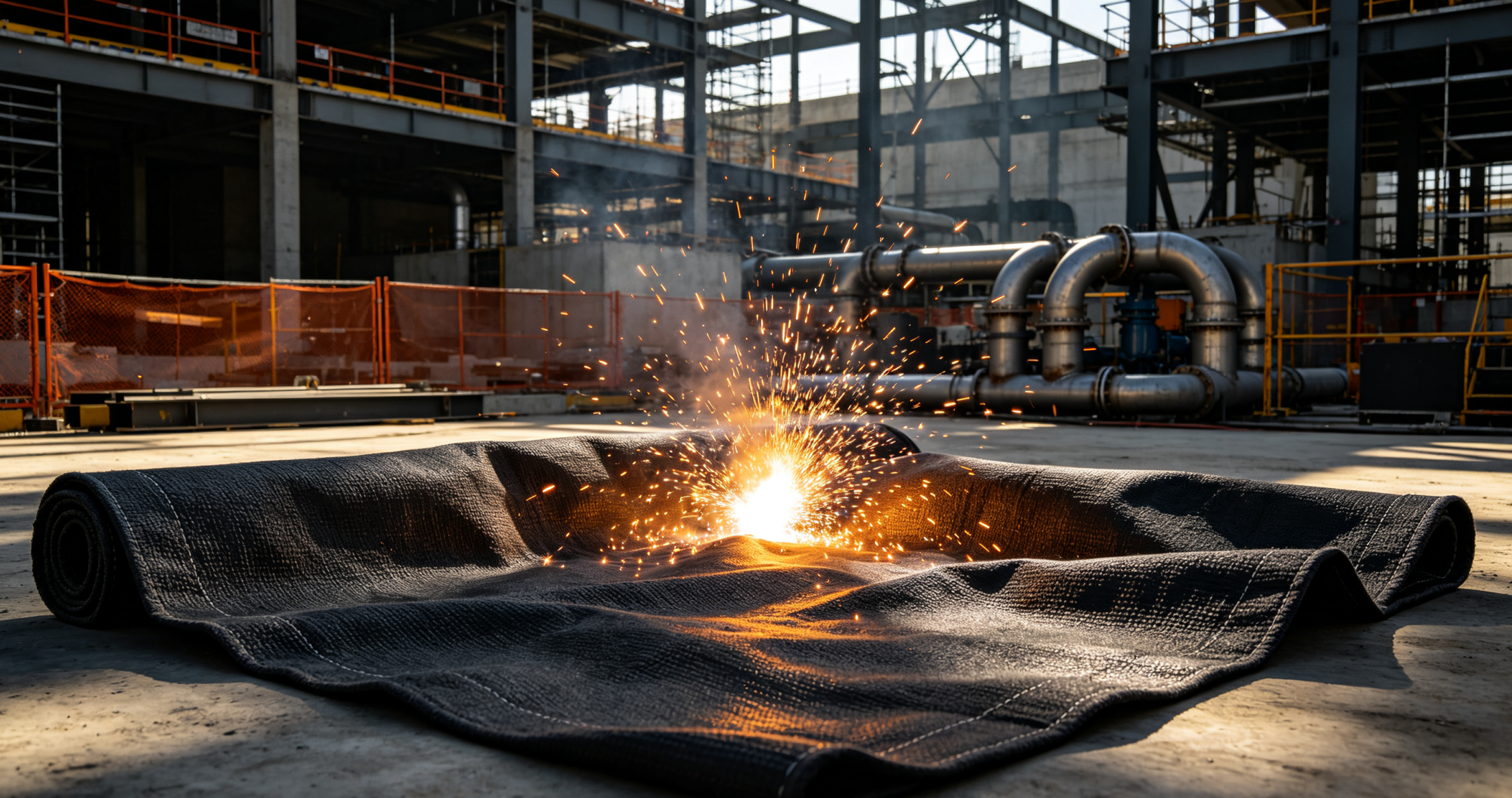
In the high-stakes environment of Japanese automotive manufacturing and precision machining, “good enough” is never enough. When a single stray spark can lead to costly downtime or compromise the integrity of automated assembly lines, the quality of your protective gear is a direct reflection of your operational safety standards. For facilities prioritizing fire prevention and […]
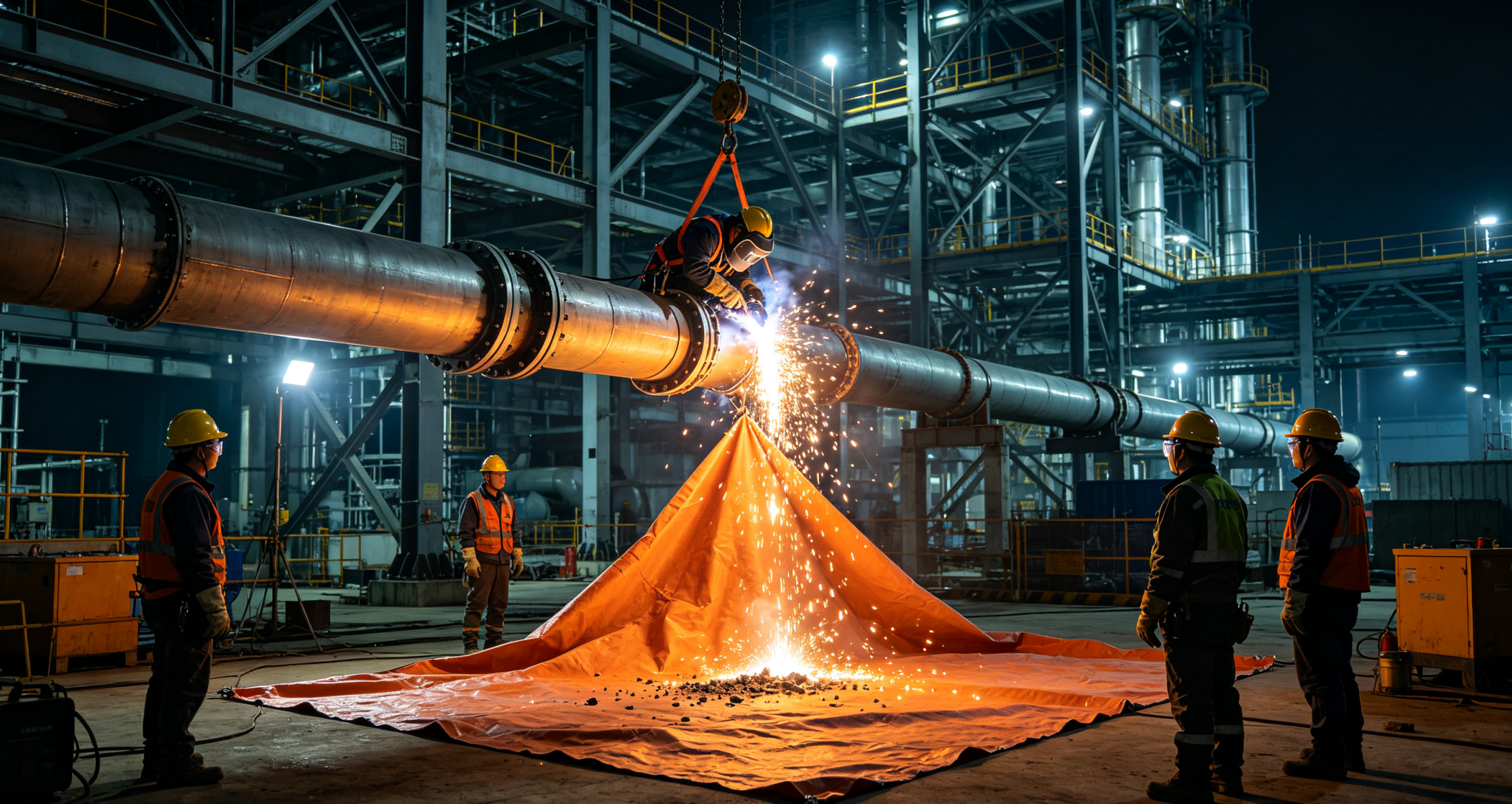
Welding sparks trigger most construction site fires. Even standardized operating procedures carry hidden risks if low-performance flame-retardant fabrics are used. Recent frequent construction fires sound alarms for hot work safety. Most welding-caused blazes stem from inadequate high-temperature slag shielding and substandard fire-resistant materials, rather than improper operation alone. Welding arcs hit over 6,000°C, with flying […]
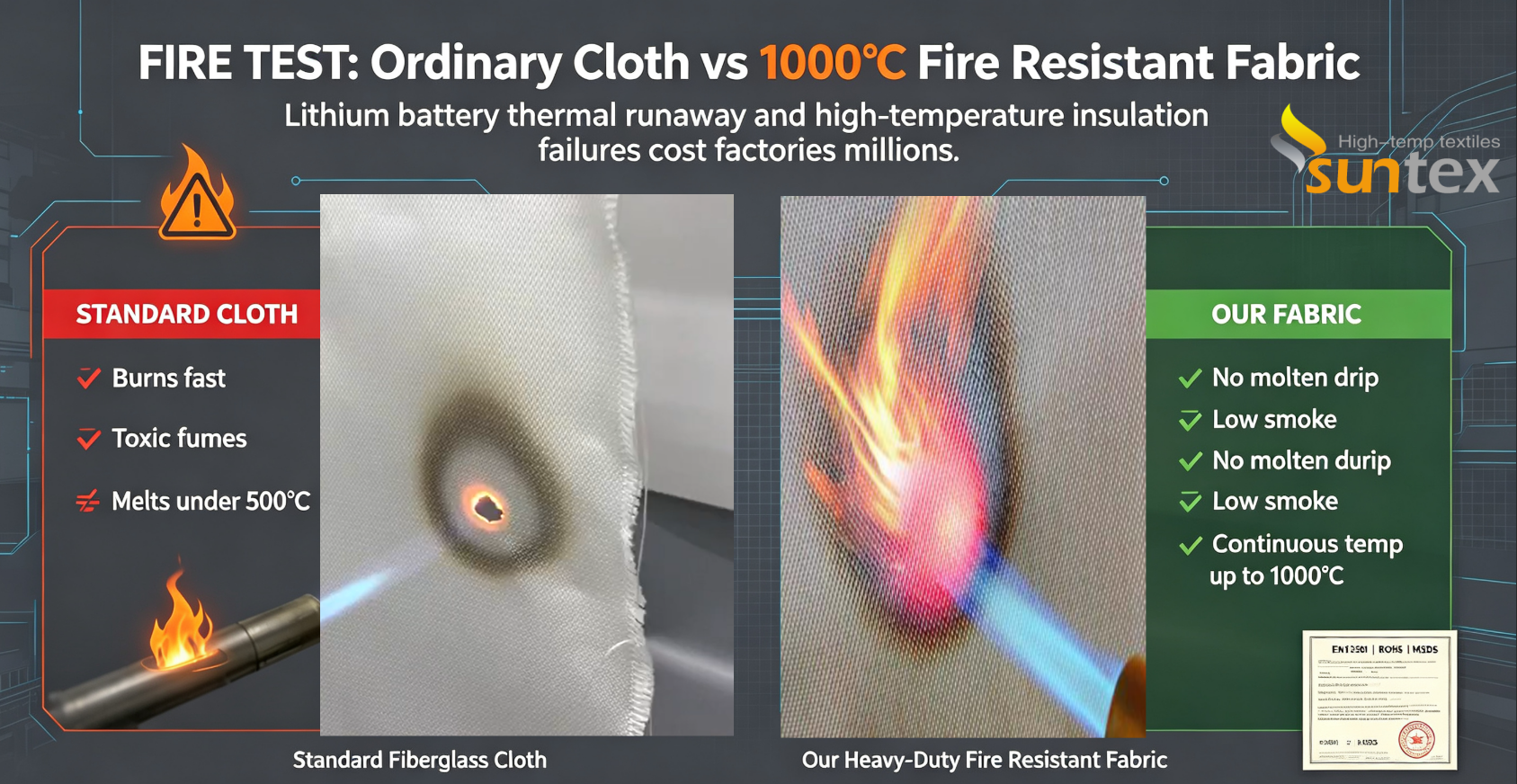
The Hidden Cost of Inferior Thermal Insulation Lithium battery thermal runaway and industrial high-temperature insulation failures frequently trigger factory fires, unplanned shutdowns and massive economic losses. Most of these accidents stem from low-performance standard insulation materials, rather than major equipment faults. Substandard fiberglass cloth fails under high heat, accelerating fire spread and causing costly industrial […]


 English
 Arabic
 Dutch
Dutch French
 German
 Italian
 Polish
 Portuguese
 Russian
 Spanish